Просмотр новости
Найдите то, что Вас интересует
 Спутники
 РН
РН SpaceX
 Роскосмос
 NASA
NASA
СпутникиРНSpaceXРоскосмосNASAToyota introduces new financing scheme in Thailand to stay competitive against low-cost Chinese EVs. In a direct counter to the aggressive influx of inexpensive Chinese battery-electric vehicles across Southeast Asia, Toyota Motor has deployed one of its most potent domestic market sales weapons in Thailand: the zankure vehicle financing scheme. While balloon-style and guaranteed future […]
The post Toyota Rolls Out Japan’s Zankure Residual-Value Financing Across Thailand To Battle Low-Cost Chinese EVs first appeared on DSF.my.
Toyota introduces new financing scheme in Thailand to stay competitive against low-cost Chinese EVs.
In a direct counter to the aggressive influx of inexpensive Chinese battery-electric vehicles across Southeast Asia, Toyota Motor has deployed one of its most potent domestic market sales weapons in Thailand: the zankure vehicle financing scheme.

While balloon-style and guaranteed future value packages have been offered on a modest scale in markets like Malaysia and Singapore, Thailand serves as the first Southeast Asian hub where Toyota has introduced this Japanese-style financing blueprint nationwide across almost its entire dealer network.

The move is designed to shift buyer attention away from outright vehicle sticker prices and focus directly on affordable monthly cash flow, protecting Japan’s legacy stronghold in Baseman’s automotive capital.
How Zankure Financing Cuts Monthly Payments by 30 PercentUnder conventional hire-purchase agreements, buyers finance the entire cost of the vehicle spread over a multi-year tenure. The zankure model takes a radically different route by separating the car’s initial purchase price from its projected future worth:

When the tenure concludes, drivers retain total flexibility through three standard pathways: hand the vehicle back to the dealership, trade it in against a newer model with any excess equity counting toward the next down payment, or clear the remaining residual amount in cash or refinancing to take outright ownership.
Countering the Price Advantage of Chinese Electric CarsThe financing pivot arrives during a high-stakes market shift. Japanese brands have dominated Thai roads for nearly half a century, but generous state clean-air incentives and surplus production from China have fueled a rapid realignment toward affordable electric crossovers.
Between January and June, passenger vehicle sales across Thailand climbed 15% year-on-year, with battery-electric vehicles capturing a massive 31% share of total deliveries—up 14 percentage points from the prior year.
Chinese players have capitalized heavily on price parity. For instance, the BYD Atto 3 retails in Thailand for roughly THB 670,000 (around US$19,980), heavily undercutting traditional petrol alternatives like the Toyota Yaris Cross, which stickers closer to THB 820,000. Fueled by this price gap, BYD surged to become Thailand’s third best-selling brand in 2025, sitting right behind Toyota and Honda.

According to data compiled by the Japan External Trade Organisation (JETRO), Chinese marques expanded their share of Thailand’s registered vehicle landscape from just 6% in 2021 to 26 percent in 2026. Over that same window, the collective market share of Japanese automakers dropped from roughly 85% down to 64%.
Restructuring, Residual Values, and Value Chain RevenueThe rapid market transformation has already forced deep structural changes among legacy Japanese operations in the kingdom. Suzuki completely halted Thai vehicle assembly and sold its plant to Ford, Honda consolidated operations by shuttering one of its assembly hubs, and Nissan ended assembly at one of its two local manufacturing lines.
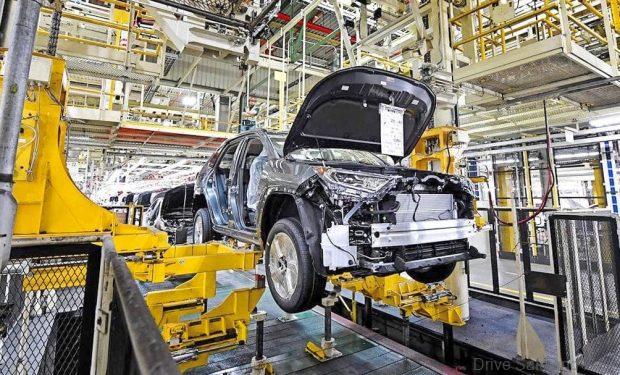
Toyota is leveraging its long-standing brand equity and higher resale values to retain market leadership without getting dragged into an unsustainable price-slashing war:
With independent research houses forecasting Thailand’s total new-vehicle volume to expand toward 950,000 units annually by 2038, Toyota’s nationwide zankure rollout turns monthly financing affordability into its primary defense against China’s fast-moving electric wave.
| # | Наименование новости | Тональность | Информативность | Дата публикации |
|---|---|---|---|---|
| 1 | Toyota cuts EV prices in China, some now under $15,000 | 0 | 21.11 | 25-03-2026 |
| 2 | Toyota discounts its new EVs as soon as they hit the lot with $7,000 off and 0% financing | 0 | 20.88 | 12-03-2026 |
| 3 | Toyota Hilux BEV Review: Diesel’s On The Rise & The Solution Has Arrived | 0 | 6.38 | 15-10-2026 |
| 4 | UMW Toyota Motor Sustains Q3 Momentum With Over 24,500 Units Sold: Expands Nationwide Public EV Charging | 0 | 10.69 | 16-10-2026 |
| 5 | Battle Of The Boxes Gets Intensive With More Options On Sale | 0 | 6.78 | 15-10-2026 |
| 6 | Toyota sells this EV in China for $15,000, using nearly 90% local parts | 0 | 16.04 | 17-03-2026 |
| 7 | Toyota Confirms Next Supra Sports Car To Be GR Prepared | 0 | 7.23 | 14-10-2026 |
| 8 | 'Joint venture in reverse': foreign carmakers seek edge with China partners | 0 | 10.4 | 01-07-2026 |
| 9 | Here’s how much Trump’s Iran war is boosting EV sales around the world | 0 | 9.71 | 14-10-2026 |
| 10 | Таиланд усиливает контроль за продажами электромобилей - «В мире» | 0 | 12.53 | 16-07-2026 |
