Просмотр новости
Найдите то, что Вас интересует
 Спутники
 РН
 SpaceX
 Роскосмос
 NASA
СпутникиРНSpaceXРоскосмосNASABackground Edible films for food packaging can be produced from hydrocolloids, lipids, resins, and composites, including gelatin. Gelatin has good film-forming ability and has been proposed as an alternative to non-biodegradable plastics. The incorporation of naturally active compounds into edible films may protect food products from oxidation and microbial contamination while also affecting the physicochemical properties of the film. Silver nanoparticles (AgNPs) have been used as active agents in food packaging because of their antibacterial and antifungal properties. Therefore, this study aimed to determine the effect of AgNP incorporation on the physicochemical characteristics of edible films prepared from Pangasius sp. skin gelatin. Methods Bruguiera gymnorrhiza mangrove extract was used for the green synthesis of AgNPs. AgNPs at different concentrations (0, 2, 4, and 8%) were incorporated into gelatin-based edible films. The films were evaluated for thickness, tensile strength, elongation at break, water vapour transmission rate, moisture content, pH, and colour. Results AgNP incorporation significantly affected the colour of the gelatin-based edible films, with increasing AgNP concentration resulting in darker films. However, despite some numerical variations, AgNP incorporation did not significantly affect film thickness (145–216 μm), tensile strength (14.58–19.72 MPa), elongation at break (21.86–54.19%), water vapour transmission rate (30.91–42.55 g/m2/day), moisture content (9.57–11.16%), or pH (5.92–6.01). Conclusions AgNP incorporation did not significantly affect the physicochemical properties of the gelatin-based edible films, except for colour. These findings provide baseline information for further development of AgNP-enriched gelatin-based edible films for food packaging applications.

ALL Metrics
-
Views
Nurdiani R, Prihanto AA, Firdaus M et al. Physicochemical Characteristics of Pangasius sp. Skin-Gelatin-Based-Edible Film Enriched with Silver Nanoparticles [version 3; peer review: 2 approved, 1 approved with reservations, 1 not approved]. F1000Research 2026, 12:160 (https://doi.org/10.12688/f1000research.129024.3)
▬
✚
Research Article
Revised
[version 3; peer review: 2 approved, 1 approved with reservations, 1 not approved]
https://orcid.org/0000-0002-5368-419X
1,2, Asep A. Prihantohttps://orcid.org/0000-0003-4180-1325
1,2, Muhamad Firdaus1,2, [...] Faridatul Nur Aini2, Fajrin Adin Nabilah2, Rosnita A Talibhttps://orcid.org/0000-0003-3848-0700
3, Nurul Hudahttps://orcid.org/0000-0001-9867-6401
4https://orcid.org/0000-0002-5368-419X
1,2, Asep A. Prihantohttps://orcid.org/0000-0003-4180-1325
1,2, [...] Muhamad Firdaus1,2, Faridatul Nur Aini2, Fajrin Adin Nabilah2, Rosnita A Talibhttps://orcid.org/0000-0003-3848-0700
3, Nurul Hudahttps://orcid.org/0000-0001-9867-6401
4PUBLISHED 05 Oct 2026
1 Bioseafood Research Unit, Universitas Brawijaya, Malang, East Java, 65145, Indonesia
2 Fish Product Technology, Universitas Brawijaya, Malang, East Java, 65145, Indonesia
3 Department of Process and Food Engineering, Universiti Putra Malaysia, 43400 UPM, Serdang, Selangor, Malaysia
4 Postgraduate School, Universitas Brawijaya, Malang, East Java, 65145, Indonesia
Rahmi Nurdiani
Roles: Conceptualization, Funding Acquisition, Supervision, Writing – Original Draft Preparation, Writing – Review & Editing
Asep A. Prihanto
Roles: Funding Acquisition, Methodology, Supervision, Writing – Review & Editing
Muhamad Firdaus
Roles: Conceptualization, Formal Analysis, Methodology, Supervision
Faridatul Nur Aini
Roles: Data Curation, Investigation, Methodology
Fajrin Adin Nabilah
Roles: Data Curation, Investigation, Methodology
Rosnita A Talib
Roles: Methodology, Writing – Review & Editing
Nurul Huda
Roles: Conceptualization, Methodology, Writing – Review & Editing
OPEN PEER REVIEW
REVIEWER STATUS
Edible films for food packaging can be produced from hydrocolloids, lipids, resins, and composites, including gelatin. Gelatin has good film-forming ability and has been proposed as an alternative to non-biodegradable plastics. The incorporation of naturally active compounds into edible films may protect food products from oxidation and microbial contamination while also affecting the physicochemical properties of the film. Silver nanoparticles (AgNPs) have been used as active agents in food packaging because of their antibacterial and antifungal properties. Therefore, this study aimed to determine the effect of AgNP incorporation on the physicochemical characteristics of edible films prepared from Pangasius sp. skin gelatin.
MethodsBruguiera gymnorrhiza mangrove extract was used for the green synthesis of AgNPs. AgNPs at different concentrations (0, 2, 4, and 8%) were incorporated into gelatin-based edible films. The films were evaluated for thickness, tensile strength, elongation at break, water vapour transmission rate, moisture content, pH, and colour.
ResultsAgNP incorporation significantly affected the colour of the gelatin-based edible films, with increasing AgNP concentration resulting in darker films. However, despite some numerical variations, AgNP incorporation did not significantly affect film thickness (145–216 μm), tensile strength (14.58–19.72 MPa), elongation at break (21.86–54.19%), water vapour transmission rate (30.91–42.55 g/m2/day), moisture content (9.57–11.16%), or pH (5.92–6.01).
ConclusionsAgNP incorporation did not significantly affect the physicochemical properties of the gelatin-based edible films, except for colour. These findings provide baseline information for further development of AgNP-enriched gelatin-based edible films for food packaging applications.
Bruguiera gymnorrhiza, edible film, gelatin, physicochemical characteristics, silver nanoparticles
Corresponding author: Rahmi Nurdiani Competing interests: No competing interests were disclosed.
Grant information: The study was fully funded through a World Class Research Grant, No: 612.26/UN10.C10/TU/2022
The funders had no role in study design, data collection and analysis, decision to publish, or preparation of the manuscript.
Copyright: © 2026 Nurdiani R et al. This is an open access article distributed under the terms of the Creative Commons Attribution License, which permits unrestricted use, distribution, and reproduction in any medium, provided the original work is properly cited. How to cite: Nurdiani R, Prihanto AA, Firdaus M et al. Physicochemical Characteristics of Pangasius sp. Skin-Gelatin-Based-Edible Film Enriched with Silver Nanoparticles [version 3; peer review: 2 approved, 1 approved with reservations, 1 not approved]. F1000Research 2026, 12:160 (https://doi.org/10.12688/f1000research.129024.3) First published: 10 Feb 2023, 12:160 (https://doi.org/10.12688/f1000research.129024.1) Latest published: 05 Oct 2026, 12:160 (https://doi.org/10.12688/f1000research.129024.3)
The revised version of the manuscript provides additional information, particularly in response to the reviewers’ comments. In the Introduction section, we have expanded the explanation of the study objectives and rationale. In the Results and Discussion section, we have clarified that the addition of AgNPs, regardless of concentration, did not significantly affect most of the physicochemical parameters evaluated, except for colour. This finding is consistent with a previous study investigating the effects of calcium and silver nanoparticles on gelatin-based films, which reported that the structural integrity and mechanical properties of the films were maintained. The uniform dispersion of AgNPs within the gelatin matrix may have contributed to the absence of significant changes in tensile strength and elasticity, while barrier properties, such as water vapour permeability, also remained relatively stable. Furthermore, our data analysis indicated that the incorporation of 4% AgNPs provided the most favourable overall film characteristics and met the established standards. Nevertheless, further research is required to investigate the biological properties, the safety and potential functional applications of AgNP-enriched edible films.
See the authors' detailed response to the review by Amiza Mat Amin
See the authors' detailed response to the review by Mohamed Bilal Goudjil
See the authors' detailed response to the review by Abhilash Sasidharan
Due to their excellent structural properties and performances, many petrochemical-based plastics are widely used. However, since these materials are not deemed environmentally friendly, increased public awareness has led to the continued development of biodegradable packaging technology.1 Edible film, one of the biodegradable packaging materials, is a thin layer attached to a food product and can be consumed.2 Edible films can be made from various materials such as polysaccharides (e.g.: starch, pectins, chitin and chitosan), lipids (e.g.: bees wax, oils), and protein (e.g.: whey, soy, pea protein, collagen, gelatin).
Gelatin is a protein macromolecule obtained from the hydrolysis of natural collagen found in skin, bone and animal connective tissue.3 Usually, gelatin comes from cows or pigs, but using raw material sources for gelatin from these animals may cause some problems related to health and religious regulations. Alternatively, fish skin is considered a safer option as a raw material for gelatin production.4 Pangasius catfish skin is a by-product resulting from the processing of fish fillets. The processing of Pangasius catfish fillets produces up to 55% of by-products, including fish skin.5 The skin can potentially be used as a raw material for gelatin due to its abundant availability. Fish gelatin is now commonly used in the production of edible films due to its low melting temperature, low oxygen permeability, and good film-forming ability.6
Nowadays, the concept of active packaging has attracted the food packaging industry and researchers. Active packaging may enable the interaction between the packaging, the food product, and the surrounding environment to improve the sensory properties and safety of food products. In addition, active agents with antimicrobial and antioxidant properties can help in extending the food’s shelf life and prevent food oxidation.7 The edible film made using fish skin gelatin usually has low biological properties, so enriching it with active compounds is necessary to produce active packaging. Several studies have shown that edible films made from fish gelatin can be manufactured by adding several active ingredients.8 One group of active ingredients that have the potential to be added are silver nanoparticles. Silver nanoparticles (AgNPs) are materials with at least one dimension with a size between 1 and 100 nm.9 They can be made by synthesizing silver metal into nano-sized particles. This synthesis can be carried out with a biosynthesis biological agent.9 In previous studies, the synthesis of silver nanoparticles from mangrove leaves such as Excoecaria agallocha L.10 and Rhizophora mucronata11,12 has been achieved. In this study, the biosynthesis process was done using the extract of mangrove leaves, Bruguiera gymnorrhiza. Bruguiera gymnorhiza, a member of the Rhizophoraceae family, is characterized by its glabrous and relatively smooth trunk with reddish-brown bark. This species is typically found along the seaward margins of mangrove swamps. B. gymnorhiza leaf extract has demonstrated potential as an active compound for incorporation into fish gelatin films, exhibiting inhibitory effects against various pathogenic bacteria such as Pseudomonas aeruginosa (5.77-23.13 mm), Aeromonas hydrophila (14.17-23.47 mm), and Staphylococcus aureus (1.70-4.43 mm).13 Additionally, the leaf extract has shown significant radical scavenging activity, with an IC50 value of 12.93 μg/mL.14 The content of bioactive compounds in plant extracts can be used as a bio-reductant that can convert silver metal into AgNPs.9
Nurdiani et al.15 reported that the incorporation of AgNPs can improve the characteristics and functionalities of edible films, including enhancing product resistance and barrier properties for packaging applications. In our previous study, edible films enriched with AgNPs synthesized using Rhizophora mucronata leaves exhibited weak antimicrobial activity.15 Therefore, the present study focused on determining the physicochemical characteristics of edible films prepared from Pangasius catfish skin gelatin and enriched with AgNPs synthesized using Bruguiera gymnorrhiza leaves.
Pangasius sp. skin (frozen) was provided by PT. RUM Seafood, Sidoarjo Indonesia, and delivered to the Faculty of Fisheries and Marine Science, Universitas Brawijaya. Once the skins were thawed, they were cut into small pieces (0.5 × 0.5 cm2) using clean scissors. The skins were stored in a freezer (−20°C) until use. Gelatin manufacturing started by soaking the Pangasius sp. skin in NaOH 0.1 M solution with a ratio of 1:5 (w/v) for two hours at room temperature. Afterwards, the skin was washed with running water until the pH was normal (pH = 7). Next, the skin was then soaked in an acetic acid solution with a concentration of 0.6 M at a ratio of 1:5 (w/v) for two hours (at room temperature). The swollen skin was then extracted with Aqua Dest, with a ratio of 1:3 (w/v) in a water bath (at 55–60°C) for four hours. Afterwards, the filtrate was collected and poured onto a baking tray for drying using a dehydrator for 8 to 12 hours at 55–60°C. The gelatin sheets obtained were then milled using a grinder to make gelatin powder.8
The leaves of Bruguiera gymnorrhiza (Taxonomy ID: 39984) were collected from the Sendang Biru coastal area, Malang, East Java, Indonesia. The leaves were dried using a dehydrator for 8–12 hours at a temperature of 40–45°C. Dried leaves were then reduced in size using a grinder. Two grams of mangrove powder was then dissolved into 100 mL of deionized water and heated to boiling for three minutes. The mangrove solution was allowed to cool to room temperature, filtered using a Buchner funnel, and poured into a dark glass bottle.12
One mL of mangrove leaf extract was mixed with 9 mL 20 mM AgNO3. The solutions were incubated for 0, 5, 10, and 15 minutes. The colour change was observed from the original whitish brown to brown.9
Edible film was made by dissolving 4 grams gelatin into 100 mL distilled water. The gelatin solution was then heated at 50°C for 30 minutes. Next, the glycerol was added at 0.5% (v/v) and heated at 45°C for 15 minutes. AgNPs with the best incubation time was added at several concentrations per 100 mL (0 mL, 2 mL, 4 mL, and 8 mL). The concentration of silver nanoparticles (AgNPs) added to the edible film ranged from the minimum amount needed to show antibacterial activity to the maximum amount considered safe.16,17 Once ready, the edible film solution was evenly poured into an 18 cm × 18 cm non-stick baking pan before being dried in an oven at a temperature of 55°C for 18–20 hours. The edible film was then removed from the oven, left at room temperature for 10 minutes, and peeled off slowly.15
Thickness
The thickness of the edible film sample was measured using a micrometre screw with an accuracy of 0.01 mm. Thickness measurements were carried out at five different points, and the average results represented the sample.18
Moisture content
An empty crucible cup was oven dried at 105°C for 30 minutes. As it cooled down, 1 gram of the sample was then put into the cup and weighed (W1). Next, the sample was put into the oven and dried at a temperature of 105°C for three hours. After that, the cup was weighed again (W2).19
Moisture content=W1−W2Sample weight×100%
Water vapour transmission rate (WVTR)
The WVTR of each film was measured according to Ref. 20. The edible film was cut into a circle with a diameter of 3 cm. Ten grams of silica gel were poured into a cup. The sample was glued on top of the cup to cover it. The cup was weighed and recorded as W1. The sample was allowed to stand for 24 hours at room temperature and was then weighed again and recorded as W2. The WVTR was then calculated using the formula:
WVTR=Weight differenceSample surface area×Time
Tensile strength and elongation
Edible film was cut to a size of 5 × 1 cm2. The thickness and initial length of the sample were measured. Next, each end of the edible film was clamped on a tensile machine. The sample was then pulled at 10 mm/min speed until it broke.18 Finally, the tensile strength value was calculated by dividing the maximum stress (F max) by the area of the edible film using the formula:
Tensile strength=FmaxA
The measurement of the elongation of the edible film was carried out using a tensile strength device. Elongation is expressed as a percentage and is measured using the formula:
Elongation%=Stretch when breakingupcmInitial lengthcm×100%
pH
The pH test was carried out using a pH meter. The measurement was conducted on the edible film solution prior to the drying process.21
Colour
The colour of the edible films was measured using a colorimeter. Measurements were made by placing an edible film sample on the colour reader sensor. The reading button was set to L* (lightness), a* (redness) and b* (yellowness), and the target button was pressed. The results then appeared on the screen.
SPSS commercial software (IBM SPSS Statistics version 25.0, Chicago, IL, USA) was used for statistical analysis. The data were expressed as mean ± standard deviation (mean ± SD). A one-way analysis of variance (ANOVA) and Tukey’s test with a p < 0.05 significance level were applied.
The physicochemical properties of edible films enriched with various concentrations of silver nanoparticles were evaluated. In this study, silver nanoparticles were synthesized using green synthesis with mangrove leaf extract. The reason for the formation of nanoparticles using green synthesis for active agents incorporated in gelatin edible films is biocompatibility. Green-synthesized nanoparticles are often biocompatible and non-toxic, making them suitable for use in edible films that come into direct contact with food products.22 The green synthesis of nanoparticles using plant extracts involves a mechanism that includes the reduction of metal ions, complex formation, stabilization, and shape control. This process utilizes the natural compounds present in plant extracts to facilitate the synthesis of nanoparticles with unique properties.23
In general, the addition of silver nanoparticles, regardless of the concentration, did not significantly affect any of the physicochemical parameters evaluated ( Table 1). This might be because the concentration of silver nanoparticles added was considered small. The finding is consistent with the study conducted by Gutiérrez et al.24 who investigated the impact of adding calcium and silver nanoparticles to gelatin-based films. They found that the films’ structural integrity and mechanical properties were preserved. The dispersion of AgNPs within the gelatin matrix was uniform, preventing significant changes in the film’s tensile strength and elasticity. Additionally, the barrier properties, such as water vapor permeability, remained stable.
Thickness is one of the characteristics of edible coatings that greatly affects the biological properties and shelf life of food-coating products.25 The average thickness of the edible film was between 145 and 216 μm ( Table 1). Although a considerable numerical difference was observed, the difference was not statistically significant (p > 0.05). According to the Japanese Industrial Standard (JIS),26 the maximum thickness of edible film should be 250 μm. The thickness of the edible film is affected by the density, viscosity and surface tension of edible film materials as well as the drying time and layering technique.27
Similarly, Arfat et al.21 reported an increasing of edible film thickness due to the addition of silver–copper nanoparticles (Ag–CuNPs). The resulting range was 61–98 μm. The increase in thickness of the edible film was related to the increase of the solid content of the edible film. Furthermore, the addition of Ag–CuNPs to the gelatin affected the structure of the protein, causing it to become regular and the film network to be more robust.
The moisture content test was crucial to determine the total number of water molecules in the edible film tissue. The moisture content in the edible film affects the stability of the product, so it is expected that the moisture content in the edible film produced is low. The moisture content of the edible film had an average value of between 9.57 and 11.16% ( Table 1). Our result was lower than the study reported by Kanmani & Rhim.28
Adding AgNPs into an edible film will usually increase its moisture content because of reduced interactions between gelatin chains and increased availability of free hydroxyl groups to absorb water. The moisture content of edible films can also be affected by temperature and drying methods. The temperature will affect the time needed in the drying process, causing an increase in the intensity of the interaction between water molecules and the hydrophilic polymer chain.29
Statistically, the WVTR test indicated that adding AgNPs into the gelatin solution had no significant effect (p > 0.05) on the value of the WVTR of the edible film. The average value of the WVTR of the edible film produced was 30.91–42.55 g/m2/day ( Table 1). Our results did not meet the Japanese Industrial Standard (JIS),26 a maximum WVTR of 7 g/m2/day. The high value of the WVTR of the edible films is due to the fact that the materials used to make the edibles are made of protein-derived materials that have polar polymers and a large number of hydrogen bonds, thus making the edible films capable of absorbing water at high humidity. The factors that can affect the WVTR values are the presence of chemicals and the structure of the constituent materials, the concentration of plasticizers, and environmental conditions such as humidity and temperature.30
The average tensile strength of the edible film was 14.58–19.72 MPa ( Table 1). The results are in accordance with the Japanese Industrial Standard (JIS),26 as the minimum tensile strength of edible film should be 0.3 MPa. The value of the tensile strength of the edible films decreased with increasing concentrations of AgNPs. This could be because AgNPs are very weak in forming crosslinks with fish skin gelatin during the production of the edible films. In comparison, the resulting edible film elongation value ranged from 54.19 to 21.86% ( Table 1). The results, however, were still much lower than the standard minimum elongation value of 7031 elongation is inversely proportional to tensile strength.23 According to Skurtys et al., 32 elongation is expressed as a percentage change in the film’s original length before breaking and gives a measure of film elongation. Elongation values range from 1 to 80%. The level of elasticity of the edible coating can be seen from the elongation value; the higher the elongation value, the more elastic the edible coating.
The addition of AgNPs into the film resulted in a decrease in the tensile strength value. This might be due to the reduction in protein chain reactions due to incorporation with AgNPs.25 The tensile strength of a film can be influenced by the constituent materials that have structural cohesion properties and the constituent materials of edible films, namely hydrocolloid protein (gelatin), contain amino acids capable of forming disulphide bonds.33 In addition, the properties of the constituent materials to create a more robust gel network will help the formation of polysaccharide molecular structures more closely, forming a more coherent film structure and reducing the absorption of water molecules.34 Bonilla & Sobral35 stated that the elongation value of gelatin and chitosan edible films with ethanolic extracts from plants increased with the increased volume of extracts. This is due to the interaction between the phenolic compounds present in the extract. Furthermore, gelatin peptides can form covalent crosslinks, forming a more cohesive and flexible matrix. The higher the elongation value of the film, the more elastic it is so that the film can be stretched more. Meanwhile, films with low elongation values will be brittle.
The results showed that the pH of the enriched edible film ranged from 5.92 to 6.01 ( Table 1). It was indicated that the higher the concentration of AgNPs Bruguiera gymnorrhiza added, the lower the pH level of fish-gelatin-based edible film. Bruguiera gymnorrhiza mangrove leaf extract was detected to have an acidic pH of around 6.15, thus, the resulting edible film was expected to have a lower pH value than the control (0% AgNPs).
Colour testing using a colour reader brings up three values: L*, a*, and b*. The L* value indicates the brightness level, a* indicates a red–green colour (a = +60 red, a = -60 green) and b* indicates a yellow–blue colour (b = +60 yellow, b = -60 blue). Edible films produced using gelatin usually have clear or dull/opaque colours.15 Statistically, the addition of the concentration of AgNPs had a significant effect (p < 0.05) on the L*, a* and b* values ( Table 2).
The addition of a higher concentration of AgNPs on the fish-gelatin-based edible film resulted in a darker colour ( Figure 1), increasing the red and yellowish colour. Similarly, Shankar et al.36 reported that the L* value of edible gelatin films with the addition of metallic nanoparticles (38.20) was lower than the control (93.15).
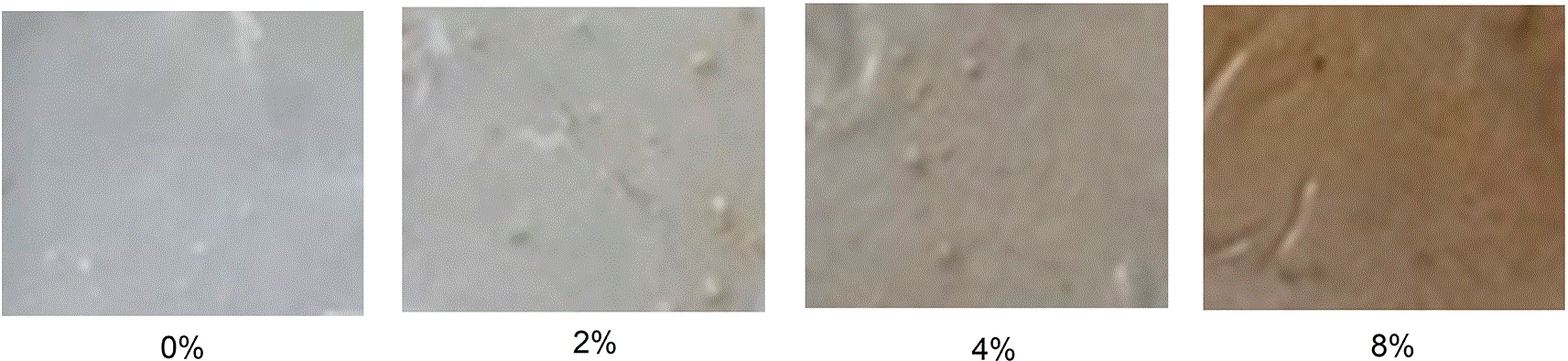
The best treatment of edible film made from Pangasius skin gelatin with the addition of silver nanoparticles synthesized using Bruguiera gymnorrhiza extract was determined using the De Garmo method (grouping and weighting parameters, where the weights given are in accordance with the importance/priority of each parameter in affecting the results of the research).37 Based on the calculation, it was suggested that the best treatment for all parameters was the third treatment (the addition of 4% silver nanoparticles ) ( Table 3).
| No | Parameter | Edible film | References |
|---|---|---|---|
| 1 | Thickness (μm) | 163.0 ± 33.80 | Max 25031 |
| 2 | Tensile strength (MPa) | 15.67 ± 6.58 | Min 0.331 |
| 3 | Elongation (%) | 54.19 ± 59.02 | Min 7031 |
| 4 | WVTR (g/m2/day) | 42.55 ± 18.96 | Max 531 |
| 5 | Moisture content (%) | 10.40 ± 0.72 | Max 1331 |
| 6 | pH | 5.95 ± 0.14 | 5.75–6.6038 |
| 7 | L* value | 74.028 ± 5.41 | 38.2036 |
| 8 | a* value | 5.83 ± 1.57 | 15.0836 |
| 9 | b* value | 13.89 ± 3.19 | 12.2436 |
The addition of various concentrations of AgNPs (0, 2, 4, and 8%) synthesized using mangrove Bruguiera gymnorrhiza had a significant effect on the colour of Pangasius gelatin-based edible film (L* value 70.773–87.363, a* value 0.440–7.398 and b* value 1.978–17.178). Nevertheless, adding AgNPs did not significantly affect the other physicochemical parameters (thickness, tensile strength, elongation, water vapour transmission, moisture content, and pH). This study recommends using 4% AgNPs to achieve the best qualities in edible film, meeting established standards. The results suggest that AgNPs can be effective active agents for developing active packaging without negatively affecting the film’s physicochemical properties. However, further research is needed to explore the toxicity and biological functions of edible films with added AgNPs.
This study did not require ethical approval because the authors used fish skins (available as waste or by-products) from the fish processing industry. Mangrove leaves were collected from a local mangrove conservation area in Malang, East Java. The conservation officer carried out the identification and collection of the mangrove leaves. The process was conducted in a way to ensures the sustainability of the local mangrove forest.
The authors would like to thank Universitas Brawijaya and the Ministry of Education, Culture, Research and Technology, the Republic of Indonesia, for the research grant.
The study was fully funded through a World Class Research Grant, No: 612.26/UN10.C10/TU/2022
The funders had no role in study design, data collection and analysis, decision to publish, or preparation of the manuscript.
Published: 05 Oct 2026, 12:160
Published: 25 Jul 2024, 12:160
Published: 10 Feb 2023, 12:160
© 2026 Nurdiani R et al. This is an open access article distributed under the terms of the Creative Commons Attribution License, which permits unrestricted use, distribution, and reproduction in any medium, provided the original work is properly cited.
Download
Export To
metrics
| Views | Downloads | |
|---|---|---|
| F1000Research | - | - |
| PubMed Central Data from PMC are received and updated monthly. | - | - |
Citations
CITE
how to cite this article
Nurdiani R, Prihanto AA, Firdaus M et al. Physicochemical Characteristics of Pangasius sp. Skin-Gelatin-Based-Edible Film Enriched with Silver Nanoparticles [version 3; peer review: 2 approved, 1 approved with reservations, 1 not approved]. F1000Research 2026, 12:160 (https://doi.org/10.12688/f1000research.129024.3)
NOTE: If applicable, it is important to ensure the information in square brackets after the title is included in all citations of this article.
track
receive updates on this article
Track an article to receive email alerts on any updates to this article.
Current Reviewer Status: ?
Key to Reviewer Statuses VIEW HIDE
ApprovedThe paper is scientifically sound in its current form and only minor, if any, improvements are suggested
Approved with reservations A number of small changes, sometimes more significant revisions are required to address specific details and improve the papers academic merit.
Not approvedFundamental flaws in the paper seriously undermine the findings and conclusions
Version 3
VERSION 3
PUBLISHED 05 Oct 2026
Revised
Reviewer Report 20 Oct 2026
Andriati Ningrum, Universitas Gadjah Mada, Yogyakarta, Indonesia
Approved
VIEWS 0
Is the work clearly and accurately presented and does it cite the current literature?
Yes
Is the study design appropriate and is the work technically sound?
Yes
Are sufficient details of methods and analysis provided to allow replication by others?
Yes
If applicable, is the statistical analysis and its interpretation appropriate?
Yes
Are all the source data underlying the results available to ensure full reproducibility?
Yes
Are the conclusions drawn adequately supported by the results?
Yes
Competing Interests: No competing interests were disclosed.
Reviewer Expertise: food science
CloseReviewer Report 12 Oct 2026
Amiza Mat Amin, Faculty of Fisheries and Food Science, Universiti Malaysia Terengganu, Kuala Nerus, Malaysia
Approved
VIEWS 0
Competing Interests: No competing interests were disclosed.
Reviewer Expertise: food science, food protein
CloseVersion 2
VERSION 2
PUBLISHED 25 Jul 2024
Revised
Reviewer Report 20 Sep 2024
Abhilash Sasidharan, Norwegian University of Science and Technology (NTNU), Trondheim, Norway; Kerala University of Fisheries and Ocean Studies, Kerala, India
Not Approved
VIEWS 0
Is the work clearly and accurately presented and does it cite the current literature?
Yes
Is the study design appropriate and is the work technically sound?
Partly
Are sufficient details of methods and analysis provided to allow replication by others?
Yes
If applicable, is the statistical analysis and its interpretation appropriate?
No
Are all the source data underlying the results available to ensure full reproducibility?
No source data required
Are the conclusions drawn adequately supported by the results?
Partly
Competing Interests: No competing interests were disclosed.
CloseReviewer Report 08 Aug 2024
Amiza Mat Amin, Faculty of Fisheries and Food Science, Universiti Malaysia Terengganu, Kuala Nerus, Malaysia
Approved
VIEWS 0
Competing Interests: No competing interests were disclosed.
Reviewer Expertise: food science, food protein
CloseVersion 1
VERSION 1
PUBLISHED 10 Feb 2023
Reviewer Report 28 May 2024
Amiza Mat Amin, Faculty of Fisheries and Food Science, Universiti Malaysia Terengganu, Kuala Nerus, Malaysia
Approved with Reservations
VIEWS 0
Is the work clearly and accurately presented and does it cite the current literature?
Yes
Is the study design appropriate and is the work technically sound?
Partly
Are sufficient details of methods and analysis provided to allow replication by others?
Yes
If applicable, is the statistical analysis and its interpretation appropriate?
Yes
Are all the source data underlying the results available to ensure full reproducibility?
Yes
Are the conclusions drawn adequately supported by the results?
Yes
Competing Interests: No competing interests were disclosed.
Reviewer Expertise: food science, food protein
CloseReviewer Report 10 Oct 2023
Mohamed Bilal Goudjil, Applied Sciences Faculty, Process Engineering Laboratory, KASDI Merbah-Ouargla University, Ouargla, Algeria
Approved with Reservations
VIEWS 0
Is the work clearly and accurately presented and does it cite the current literature?
Yes
Is the study design appropriate and is the work technically sound?
Partly
Are sufficient details of methods and analysis provided to allow replication by others?
Yes
If applicable, is the statistical analysis and its interpretation appropriate?
Partly
Are all the source data underlying the results available to ensure full reproducibility?
No source data required
Are the conclusions drawn adequately supported by the results?
No
Competing Interests: No competing interests were disclosed.
Reviewer Expertise: Phytochemistry, Essential oil, Chromatography, Renewable Energies, Nanotechnology
CloseAlongside their report, reviewers assign a status to the article:
| Invited Reviewers | ||||
|---|---|---|---|---|
| 1 | 2 | 3 | 4 | |
| Version 3 (revision) 05 Oct 26 | read | read | ||
| Version 2 (revision) 25 Jul 24 | read | read | ||
| Version 1 10 Feb 23 | read | read | ||
Mohamed Bilal Goudjil, KASDI Merbah-Ouargla University, Ouargla, Algeria
Amiza Mat Amin, Universiti Malaysia Terengganu, Kuala Nerus, Malaysia
Abhilash Sasidharan, Norwegian University of Science and Technology (NTNU), Trondheim, Norway; Kerala University of Fisheries and Ocean Studies, Kerala, India
Andriati Ningrum, Universitas Gadjah Mada, Yogyakarta, Indonesia
Sign up for content alerts