Просмотр новости
Найдите то, что Вас интересует
 Спутники
 РН
 SpaceX
 Роскосмос
 NASA
СпутникиРНSpaceXРоскосмосNASAEndophytic bacteria within medicinal plants are a largely untapped reservoir of bioactive compounds and adaptive genetic traits. Piper crocatum (red betel), a Southeast Asian medicinal herb rich in flavonoids, alkaloids, and phenolics, offers a chemically selective niche for endophytes, yet the genomes of its microbial associates remain poorly characterised. Kluyvera ascorbata occurs as a plant-associated endophyte and an opportunistic human pathogen, and its chromosomal blaKLUA gene is the recognised progenitor of the clinically important CTX-M-2 β-lactamase sublineage. We report a high-quality draft genome of endophytic strain PCL31, isolated from surface-sterilised Piper crocatum tissues collected in Bogor, Indonesia. Whole-genome sequencing used the Oxford Nanopore PromethION platform, with de novo assembly in Flye, polishing in Medaka, and quality assessment by QUAST and BUSCO. The assembly spans 4,978,299 bp across eight contigs (N50 1.45 Mbp; GC content 54.26%; 100% BUSCO completeness, enterobacterales_odb10, n = 440). Species identity was confirmed by digital DNA–DNA hybridisation (dDDH 88.6% against the type strain K. ascorbata ATCC 33433) and average nucleotide identity (ANI 98.6% against reference genome NZ_CP096201.1). Annotation identified 4,579 protein-coding sequences, 22 ribosomal RNA, 88 transfer RNA, and 81 non-coding RNA genes, and no CRISPR/Cas systems. antiSMASH 8.0 predicted four biosynthetic gene clusters (BGCs): a 53.8 kb non-ribosomal peptide synthetase (NRPS)–metallophore cluster matching the conserved enterobactin locus (MIBiG similarity 0.83), plus three low-similarity clusters (≤ 0.50) of uncertain novelty — a ribosomally synthesised and post-translationally modified peptide (RiPP)-like cluster, a terpene-precursor cluster, and an azole-containing RiPP. CARD-RGI profiling returned one Perfect hit (blaCTX-M-2) and 25 Strict hits, the latter dominated by intrinsic Enterobacteriaceae efflux and target-modification genes; phenotypic confirmation was not performed. This genome provides a resource for bioprospecting secondary metabolites from medicinal-plant endophytes and underscores the value of plant-associated isolates for biosafety and antimicrobial-resistance surveillance in opportunistic pathogens.

ALL Metrics
-
Views
Sidhartha E, Pratama R, Ng ER et al. High-Quality Draft Genome Sequence of Endophytic Kluyvera Ascorbata Strain PCL31 Isolated from Piper Crocatum (red betel) [version 2; peer review: 1 approved, 2 approved with reservations]. F1000Research 2026, 15:1073 (https://doi.org/10.12688/f1000research.183746.2)
▬
✚
Genome Note
Revised
[version 2; peer review: 1 approved, 2 approved with reservations]
https://orcid.org/0000-0002-1475-4693
1,2, Rahadian Pratamahttps://orcid.org/0000-0002-2709-7370
3, Ernst Richard Ng2, [...] Irene Nathania Christiawan2, Yeshaya Valentine2, Rio Hermantara2, I Made Artika3, Okti Nadia Poetri4, Mega Safithrihttps://orcid.org/0000-0003-0480-2388
5,6https://orcid.org/0000-0002-1475-4693
1,2, Rahadian Pratamahttps://orcid.org/0000-0002-2709-7370
3, [...] Ernst Richard Ng2, Irene Nathania Christiawan2, Yeshaya Valentine2, Rio Hermantara2, I Made Artika3, Okti Nadia Poetri4, Mega Safithrihttps://orcid.org/0000-0003-0480-2388
5,6PUBLISHED 21 Aug 2026
1 Department of Biochemistry, Graduate School, IPB University, Bogor, West Java, Indonesia
2 Department of Biomedicine, School of Health and Life Sciences, i3L University, Jakarta, Indonesia
3 Biomolecule Division, Department of Biochemistry, IPB University, Bogor, West Java, Indonesia
4 Department of Infectious Diseases and Public Health, School of Veterinary Medicine and Biomedical Sciences, IPB University, Bogor, West Java, Indonesia
5 Bioanalysis Division, Department of Biochemistry, IPB University, Bogor, West Java, Indonesia
6 Tropical Biopharmaca Research Center, IPB University, Bogor, West Java, Indonesia
Elizabeth Sidhartha
Roles: Conceptualization, Data Curation, Formal Analysis, Funding Acquisition, Investigation, Methodology, Writing – Original Draft Preparation, Writing – Review & Editing
Rahadian Pratama
Roles: Conceptualization, Formal Analysis, Methodology, Writing – Review & Editing
Ernst Richard Ng
Roles: Formal Analysis, Investigation, Writing – Original Draft Preparation, Writing – Review & Editing
Irene Nathania Christiawan
Roles: Formal Analysis, Investigation, Writing – Original Draft Preparation, Writing – Review & Editing
Yeshaya Valentine
Roles: Investigation, Project Administration, Writing – Original Draft Preparation, Writing – Review & Editing
Rio Hermantara
Roles: Data Curation, Funding Acquisition, Methodology, Writing – Review & Editing
I Made Artika
Roles: Supervision, Writing – Review & Editing
Okti Nadia Poetri
Roles: Funding Acquisition, Supervision, Writing – Review & Editing
Mega Safithri
Roles: Conceptualization, Funding Acquisition, Supervision, Writing – Review & Editing
OPEN PEER REVIEW
REVIEWER STATUS
Endophytic bacteria within medicinal plants are a largely untapped reservoir of bioactive compounds and adaptive genetic traits. Piper crocatum (red betel), a Southeast Asian medicinal herb rich in flavonoids, alkaloids, and phenolics, offers a chemically selective niche for endophytes, yet the genomes of its microbial associates remain poorly characterised. Kluyvera ascorbata occurs as a plant-associated endophyte and an opportunistic human pathogen, and its chromosomal blaKLUA gene is the recognised progenitor of the clinically important CTX-M-2 β-lactamase sublineage. We report a high-quality draft genome of endophytic strain PCL31, isolated from surface-sterilised Piper crocatum tissues collected in Bogor, Indonesia. Whole-genome sequencing used the Oxford Nanopore PromethION platform, with de novo assembly in Flye, polishing in Medaka, and quality assessment by QUAST and BUSCO. The assembly spans 4,978,299 bp across eight contigs (N50 1.45 Mbp; GC content 54.26%; 100% BUSCO completeness, enterobacterales_odb10, n = 440). Species identity was confirmed by digital DNA–DNA hybridisation (dDDH 88.6% against the type strain K. ascorbata ATCC 33433) and average nucleotide identity (ANI 98.6% against reference genome NZ_CP096201.1). Annotation identified 4,579 protein-coding sequences, 22 ribosomal RNA, 88 transfer RNA, and 81 non-coding RNA genes, and no CRISPR/Cas systems. antiSMASH 8.0 predicted four biosynthetic gene clusters (BGCs): a 53.8 kb non-ribosomal peptide synthetase (NRPS)–metallophore cluster matching the conserved enterobactin locus (MIBiG similarity 0.83), plus three low-similarity clusters (≤ 0.50) of uncertain novelty — a ribosomally synthesised and post-translationally modified peptide (RiPP)-like cluster, a terpene-precursor cluster, and an azole-containing RiPP. CARD-RGI profiling returned one Perfect hit (blaCTX-M-2) and 25 Strict hits, the latter dominated by intrinsic Enterobacteriaceae efflux and target-modification genes; phenotypic confirmation was not performed. This genome provides a resource for bioprospecting secondary metabolites from medicinal-plant endophytes and underscores the value of plant-associated isolates for biosafety and antimicrobial-resistance surveillance in opportunistic pathogens.
Kluyvera ascorbata, Piper crocatum, bacterial endophyte, Oxford Nanopore, genome mining, biosynthetic gene clusters, resistance genes
Corresponding author: Mega Safithri Competing interests: No competing interests were disclosed.
Grant information: This work is funded by the Indonesian Endowment Fund for Education (LPDP) on behalf of the Indonesian Ministry of Higher Education, Science and Technology and managed under the EQUITY Program (Contract No: 59544/IT3.D10/PT.01.03/P/B/2025) assigned to Mega Safithri.
The funders had no role in study design, data collection and analysis, decision to publish, or preparation of the manuscript.
Copyright: © 2026 Sidhartha E et al. This is an open access article distributed under the terms of the Creative Commons Attribution License, which permits unrestricted use, distribution, and reproduction in any medium, provided the original work is properly cited. How to cite: Sidhartha E, Pratama R, Ng ER et al. High-Quality Draft Genome Sequence of Endophytic Kluyvera Ascorbata Strain PCL31 Isolated from Piper Crocatum (red betel) [version 2; peer review: 1 approved, 2 approved with reservations]. F1000Research 2026, 15:1073 (https://doi.org/10.12688/f1000research.183746.2) First published: 06 Jul 2026, 15:1073 (https://doi.org/10.12688/f1000research.183746.1) Latest published: 21 Aug 2026, 15:1073 (https://doi.org/10.12688/f1000research.183746.2)
This revision strengthens the manuscript's framing, methodological transparency, and interpretive caution in response to the reviewer's comments.
Introduction: The rationale was reframed to present Piper crocatum as a selective niche that may favour endophytes bearing detoxification, efflux, and biosynthetic capacity, and an explicit study aim was added. The CTX-M narrative was rewritten to provide better connection between plant microbiomes and clinical settings. Novelty was sharpened by noting that existing K. ascorbata genomes (type strain ATCC 33433; reference strain SK) derive from clinical or environmental sources rather than medicinal-plant endophytes.
Methods. Added: a rationale and caveat for 37 °C isolation (biases toward culturable mesophiles; the isolate represents one community member, not a full survey); explicit DNA quality-acceptance criteria for library prep; single-round Medaka polishing; CheckM2 contamination/completeness assessment; a corrected BUSCO quality threshold (<5% duplication, not contamination); an updated ANI species threshold (95–96%); and Bakta default annotation parameters.
Results. Added mean read length, a genome-size/GC comparison against reference genomes, CheckM2 results (0% contamination, 100% completeness), and an expanded explanation of assembly fragmentation (rRNA operons plus other repetitive elements). BGC and resistome interpretations were made more cautious, distinguishing intrinsic/regulatory determinants from acquired ones and noting that clinical significance cannot be inferred from sequence alone. The CTX-M-2 Perfect hit now reports 100% identity to the reference model.
Other. A "Use of Generative AI" statement was added. Two references were removed and four additional references added.
See the authors' detailed response to the review by Mushtak T. S. Al-Ouqaili
Endophytes, mainly bacteria and fungi, colonise plant tissues internally throughout part or all of their life cycle without producing obvious disease symptoms in the host plant (Ali et al., 2024). They represent a largely untapped reservoir of bioactive compounds and adaptive genetic traits (Ali et al., 2024; Tsipinana et al., 2023). Endophytes play a central role in plant fitness by enhancing nutrient uptake, generating phytohormones, promoting tolerance to environmental challenges, and protecting host plants from pathogens (Tsipinana et al., 2023). Endophytes are also able to produce bioactives such as antibacterial, anticancer, antioxidant, and anti-inflammatory metabolites that may be of medicinal and commercial interests (Hashem et al., 2023; Wang et al., 2025). Medicinal plants are considered significant endophyte reservoirs because their diverse secondary metabolites impose continuous chemical selective pressures that may favour particular adaptive features, such as detoxification mechanisms, antimicrobial resistance, stress-responses, and specialised metabolic systems (Salvi et al., 2022; Singh et al., 2022; Tsipinana et al., 2023).
Red betel (Piper crocatum) is widely used in Indonesian and broader Southeast Asian traditional medicine (Heliawati et al., 2022). Its leaves are rich in flavonoids, alkaloids, and phenolic compounds that confer numerous biological activities, including antibacterial, antifungal, antioxidant, anti-inflammatory, antidiabetic, and wound-healing properties (Gong et al., 2021; Heliawati et al., 2022; Purnama et al., 2023; Safithri et al., 2025). This complex phytochemistry suggests a selective niche that may favor endophytic bacteria bearing detoxification pathways, efflux systems, and specialised biosynthetic capacity, and may therefore shape the gene content of the endophytic community. Despite this, the genomic features of Piper crocatum endophytes remain poorly characterised. In this study, we characterised a culturable and purified isolate by whole-genome sequencing, to provide a high-quality genome for further genome mining, while preserving a viable culture that permits downstream metabolomic and phenotypic characterization necessary for bioprospecting and biosafety assessment.
Among the Enterobacteriaceae recovered from plant tissues, Kluyvera ascorbata is of particular interest because of its dual ecological-clinical profile, as it occurs as a plant-associated endophyte but also acts as an opportunistic human pathogen (Huang et al., 2024). This dual ecological–clinical identity gives K. ascorbata additional significance beyond bioprospecting: environmental and plant-associated bacteria are increasingly recognised as overlooked reservoirs of resistance determinants that may be transferred to clinical pathogens through horizontal gene transfer. The chromosomal blaKLU genes of environmental Kluyvera spp. are recognised as the progenitor of the clinically important CTX-M extended-spectrum β-lactamase lineage, which has been captured onto plasmids by the insertion sequences ISEcp1 and ISCR1 and subsequently disseminated among clinical pathogens (Cantón et al., 2012; Humeniuk et al., 2002; Rodriguez & Gutkind, 2024). In K. ascorbata specifically, the chromosomal blaKLUA gene corresponds to the plasmid-borne CTX-M-2 cluster (Cantón et al., 2012; Humeniuk et al., 2002; Yu et al., 2023). This provides a mechanistically documented pathway by which a resistance gene resident in an environmental, plant-associated genus has entered clinical settings through horizontal gene transfer. The characterisation of resistance-associated genes in an endophytic representative of the species extends the surveillance of this reservoir into the plant internal compartment, which is important for both evolutionary insight and biosafety assessment.
Whole-genome sequencing offers a unified framework to address both dimensions simultaneously, enabling the identification of biosynthetic gene clusters, virulence determinants, and antimicrobial resistance genes that are routinely missed by conventional phenotypic approaches, and supporting prediction of metabolic potential for bioprospecting (Liu et al., 2022; Meesil et al., 2023; Tamang et al., 2024). Although several K. ascorbata genomes are publicly available — including the clinically-derived type strain ATCC 33433 and the environmentally-derived reference strain SK (NZ_CP096201.1) — these derive from clinical or environmental sources, and to our knowledge no genome of an endophytic K. ascorbata recovered from a tropical medicinal plant such as Piper crocatum has been reported. This leaves the biosynthetic capacity, adaptive traits, and resistance repertoire of such isolates unexplored. Here, we present a high-quality draft genome of an endophytic Kluyvera ascorbata isolated from surface-sterilised Piper crocatum tissues. The aims are: (i) to deposit a publicly accessible reference genome for an endophytic Kluyvera ascorbata from a tropical medicinal plant, (ii) to catalogue its biosynthetic gene cluster inventory, and (iii) to profile its predicted antimicrobial resistance gene complement to inform biosafety and AMR surveillance. This provides a reference for comparative and evolutionary genomics of the Kluyvera/CTX-M lineage, for genome mining and natural-product discovery from medicinal-plant endophytes, and for environmental antimicrobial-resistance surveillance.
A healthy plant of Piper crocatum was collected from Bogor, Indonesia. The plant was identified by Dr. Joeni Setijo Rahajoe (Herbarium Bogoriense, BRIN) by morphological comparison with an authenticated reference specimen of the same species held at the Herbarium Bogoriense (BO), Directorate of Scientific Collection Management, National Research and Innovation Agency (BRIN), Cibinong, Indonesia (specimen accession no. BO-1475717). Plant tissues (leaves, stems, and roots) were thoroughly washed under running tap water, followed by surface sterilisation using 70% ethanol for two minutes, 5% sodium hypochlorite for five minutes, 70% ethanol for 30 seconds, and rinsed four times with sterile distilled water. The sterilised tissues were used for further processing. Tissues were macerated and segmented prior to enrichment in tryptic soy broth (TSB) for four hours in a shaker incubator with 180 RPM at 37°C. The suspension was then spread onto tryptic soy agar (TSA) supplemented with amphotericin B, and incubated in a 37°C incubator for 20 hours for bacterial isolation. Enrichment and isolation were carried out at 37 °C to recover fast-growing, culturable mesophilic endophytes. This culture condition biases recovery toward mesophilic taxa of potential clinical relevance and may under-represent other endophytic community members; therefore the isolate reported here represents one member of the culturable endophytic community rather than a survey of its full diversity. Distinct bacterial colonies were subcultured onto fresh TSA plates several times until pure isolates were obtained. The isolate used in this study was designated PCL31, preserved at −80°C in 25% (v/v) glycerol, and deposited in the i3L University microbial culture collection under the strain designation PCL31. The strain is available from the corresponding author (Mega Safithri; [email protected]) upon reasonable request for non-commercial research use, subject to institutional approval and a completed material transfer agreement. To confirm endophytic origin, 100 μL of the final rinse water was plated on TSA in parallel; no colonies were recovered after 48 h at 37°C.
The pure isolates were cultured in tryptic soy broth (TSB) for 24 hours in a shaker incubator at 180 RPM, 37°C. Then, the pellet of the pure isolate obtained from the cultured broth was centrifuged at 4000 × g for 5 minutes. The pellet was further processed through lysis and purification to isolate genomic DNA using the spin-column method from the gSYNC™ DNA extraction kit (Geneaid Biotech Ltd., Taiwan). Extracted DNA samples were evaluated using gel electrophoresis (1% tris borate-EDTA agarose w/v) for integrity, and NanoDrop Lite Plus microvolume spectrophotometer (Thermo Fisher Scientific, USA) as well as Quantus fluorometer (Promega, USA) equipped with the QuantiFluor ONE dsDNA system, for concentration and purity. DNA was accepted for library preparation when it showed a high-molecular-weight band without visible degradation on the gel, a minimum concentration of 15 ng/μl, A260/280 of 1.8 and A260/230 of 2.0-2.2, and minimum DNA amount of 400 ng.
The DNA library was prepared for PromethION ONT using the SQK-NBD114.24 ligation sequencing kit according to the manufacturer’s recommendation (Oxford Nanopore Technology, UK). Kits from NEBNext, FFPE Repair Mix (NEB M6630, UK) and Ultra II End Repair Module (NEB E7546, UK) were employed in the library preparation. In brief, total gDNA was repaired using an end-prep enzyme mix (NEB M6630 & NEB E7546), generating DNA with 5′ phosphorylated, 3′ dA-tailed ends. Barcodes were ligated with an ONT-compatible adapter. The library was quantified with a Quantus Fluorometer (Promega, USA) before loading onto the FLO-PRO114M flow cell. Sequencing control was conducted in MinKNOW v23.04.6 following the default sequencing run from ONT (72 h). The output raw reads were set to POD5 for a separate basecalling process.
The raw POD5 data generated was basecalled using Dorado v0.8.2 super accuracy model and the resulting BAM output was converted to FASTQ using Samtools v1.21 (Danecek et al., 2021). Next, the raw FASTQ file was assessed using NanoPlot v1.42.0 to analyze long-read ONT whole genome sequences (De Coster & Rademakers, 2023). A pre-filtering step with Filtlong v0.2.1 (https://github.com/rrwick/Filtlong) with min-length 1 kb and min-Q 10 did not improve the assembly N50, BUSCO completeness, or estimated coverage in pilot tests, and was therefore omitted from the final pipeline. Reads were then assembled de novo using Flye v2.9.5 (Kolmogorov et al., 2019) to generate a whole-genome sequencing draft of the isolate in FASTA format. Parameters included --nano-hq --genome-size 5 m --iterations 3 --threads 4. The draft assembly was then polished using a single round of Medaka consensus v2.0.1 to enhance sequence accuracy and correct residual errors. The quality of the polished assembly, including total length, GC content, and N50, was evaluated using the quality assessment tool for genome assembly (QUAST) v5.3.0 (Gurevich et al., 2013). Genome completeness of the polished assembly was assessed using the benchmarking universal single-copy orthologs (BUSCO) v5.8.0 (Manni et al., 2021) against the enterobacterales_odb10 lineage dataset (n = 440 single-copy orthologs), where assemblies with >95% completeness and <5% duplication were considered high-quality. Additionally, assembly contamination and completeness were assessed with CheckM2 v1.1.0 (Chklovski et al., 2023) using default parameters.
Assembly graph topology was inspected from the Flye assembly_info.txt output. Plasmid replicons were screened with PlasmidFinder v2.1 against the Enterobacterales database (≥95% identity, ≥60% coverage; Carattoli et al., 2014), and molecule classification (chromosome vs. plasmid) and mobility typing were performed with MOB-suite v3.1.9 using mob_recon defaults (Robertson & Nash, 2018). Per-contig statistics (length, GC content, coverage, circularity, and replicon/molecule assignment) are provided in Underlying Data (Sidhartha et al., 2026).
Whole genome-based taxonomic analysis was carried out on the type (strain) genome server (TYGS) (Meier-Kolthoff & Göker, 2019) by submitting the polished genome assembly and utilizing an unrestricted query. The TYGS webserver performed pairwise comparisons of genome sequences against the TYGS database to yield species identification, DNA-DNA hybridization (dDDH) score, and phylogenetic inference. A genome BLAST distance phylogeny (GBDP) tree was also generated.
The result was further confirmed using FastANI v1.34 (Jain et al., 2018) against the reference Kluyvera ascorbata complete-genome assembly NZ_CP096201.1 (strain SK) retrieved from NCBI RefSeq; the species type strain is ATCC 33433 (assembly JMPL00000000), used for the TYGS dDDH comparison above. The average nucleotide identity (ANI) was calculated by the mean percentage of identical nucleotides across all shared regions between the obtained and reference sequences. Results were interpreted based on the established ANI threshold of 95-96%.
Genome annotation was performed using Bakta v1.9.4 (Schwengers et al., 2021) utilizing Bakta database v5.0_2023-03-20 and AMRFinderPlus database v3.12–2024-05-02.2 and the default annotation workflow. Coding sequences were predicted with Pyrodigal using translation table 11, with pseudogene detection enabled by default, and all other parameters were left at their default values.
BGCs were identified using antiSMASH 8.0 (Blin et al., 2025) in relaxed detection mode with KnownClusterBlast, ClusterBlast, SubClusterBlast, MIBiG comparison, and ClusterCompare modules enabled; references were drawn from MIBiG v4.0. Similarity scores represent the aggregated region-level score from antiSMASH (range 0–1), where higher values reflect greater gene content and synteny conservation with the reference cluster; scores ≥0.80 typically indicate clusters encoding homologues of the reference compound, whereas scores ≤0.50 were interpreted as putative, low-confidence matches.
Antimicrobial resistance gene (ARG) profiling was done using the Comprehensive Antibiotic Resistance Database (CARD) v4.0.1 Resistance Gene Identifier (RGI) v6.0.5 (Alcock et al., 2023), selecting for Perfect and Strict hits, and specifying the input as high quality/coverage assembly.
The assembled genome was screened for CRISPR arrays and Cas operons using the CRISPRCasFinder (Couvin et al., 2018) utilizing the default settings.
Genome map was visualized using Proksee (Grant et al., 2023) to generate a circular genome map depicting sequence features, contig boundaries, and genomic architecture. BGCs and ARGs coordinates from their respective tools were manually converted into a location map as.bed file and included as separate forward- and reverse-strand tracks.
The ONT sequencing generated 117,809 reads totalling 174.6 Mbp, with a mean read length of 1482, read N50 of 3,007 bp and 75% of reads >Q10 ( Table 1). Based on an estimated genome size of ~5.0 Mb for Kluyvera ascorbata, this corresponds to an estimated average depth of coverage of approximately 35×. The polished assembly comprised 4.98 Mbp across eight contigs (assembly N50 = 1.45 Mbp; Table 1). The genome size (4.98 Mbp) and GC content (54.26%) are consistent with published K. ascorbata genomes (5.1 Mbp with GC content of 54% for NCBI RefSeq NZ_CP096201.1, and 4.9 Mbp with GC content of 54.5% for ATCC 33433). All eight contigs were classified as chromosomal by MOB-suite, and PlasmidFinder detected no plasmid replicons (≥95% identity, ≥60% coverage); no plasmids were therefore identified in strain PCL31 (Underlying Data). The fragmentation into eight chromosomal contigs likely reflects unbridged repetitive regions, principally the rRNA operons: the genome encodes 22 rRNA genes, corresponding to seven rRNA operons (21 genes) plus one additional 5S rRNA (Bakta annotation, Table 2), with each operon spanning ~5–6 kb that a read N50 of 3 kb cannot span unambiguously. Other repetitive elements common in enterobacterial genomes, such as insertion sequences, prophages, and tandem repeats, may contribute additional break points. Despite this fragmentation, BUSCO recovered 100.0% of single-copy orthologs from the enterobacterales_odb10 lineage with 0% duplication and 0% fragmentation, indicating that the chromosomal gene space is fully represented. CheckM2 estimated 0% contamination and 100% completeness. This indicates that contiguity was limited by read length rather than sequencing depth, as the modest coverage of 35× was sufficient to recover the complete chromosomal gene space. A more contiguous assembly would be achieved more effectively by longer reads such as with optimized high-molecular-weight extraction.
TYGS species identification using the whole genome assembly suggested Kluyvera ascorbata, as indicated by the dDDH value of 88.6% with the reference strain Kluyvera ascorbata ATCC 33433 ( Figure 1). The identity was confirmed with the ANI score of 98.6% between the sample and Kluyvera ascorbata reference sequence (NCBI RefSeq NZ_CP096201.1). The next-closest TYGS match was Kluyvera cryocrescens (dDDH = 54.3%), well below the 70% species-delineation threshold, confirming species-level assignment to Kluyvera ascorbata.
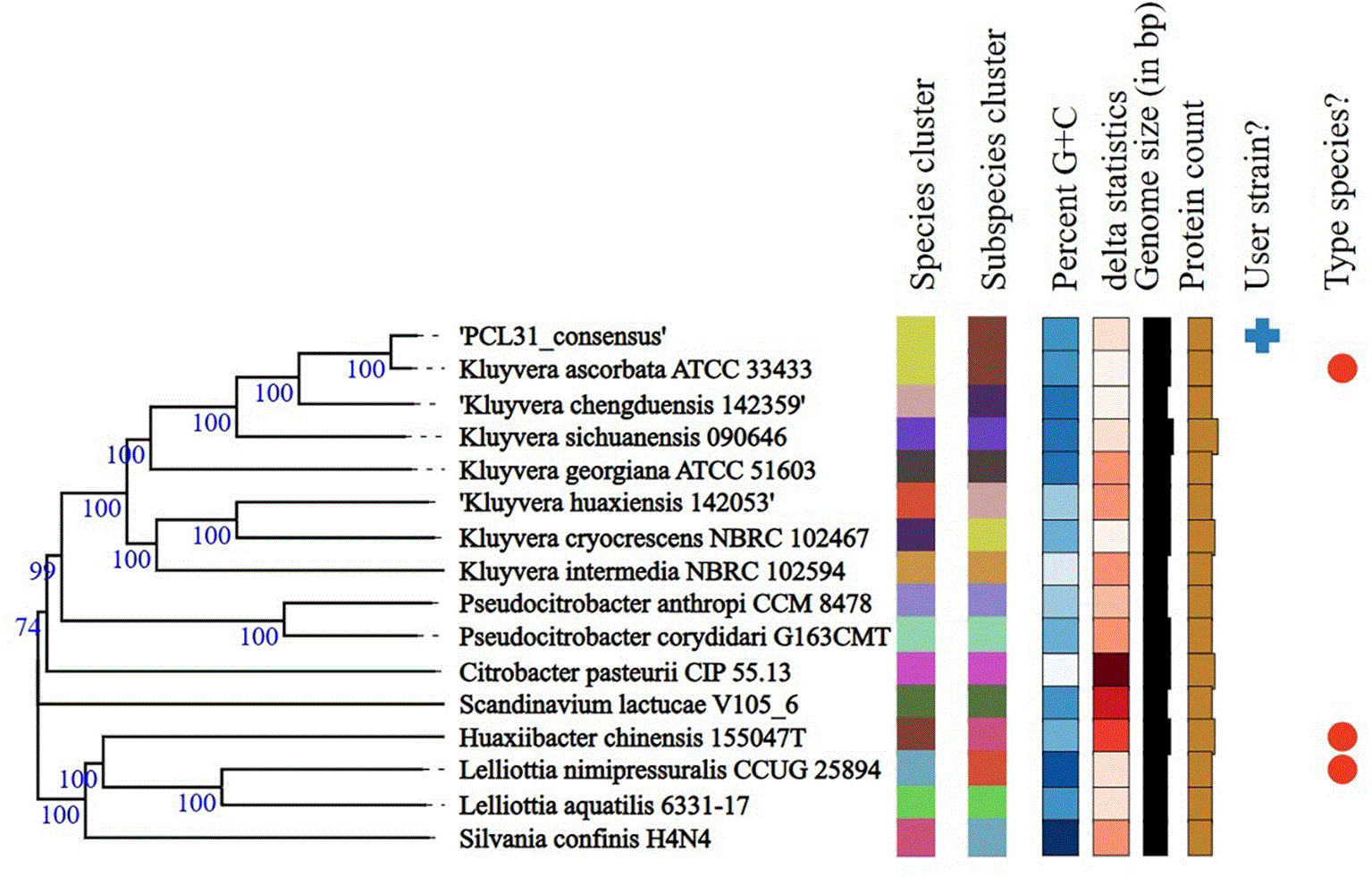
Branch lengths are scaled in GBDP distance formula. Numbers at each branch are GBDP pseudo-bootstrap support values from 100 replications.
Genome mining with antiSMASH predicted four putative biosynthetic gene clusters (BGCs) in the assembly ( Table 3). The 53.8 kb NRP-metallophore/NRPS cluster on contig_1 corresponded to the canonical enterobactin biosynthesis locus of Escherichia coli K-12 (MIBiG BGC0002476; similarity = 0.83), consistent with the presence of this deeply conserved siderophore pathway across Enterobacteriaceae. The remaining three clusters — a RiPP-like, a terpene-precursor, and an azole-containing RiPP region — returned only low-similarity matches (scores ≤0.50) to MIBiG references from phylogenetically distant taxa, and therefore represent clusters with no close match in MIBiG. Low similarity may result from cluster fragmentation across contigs, annotation differences, under-representation of Kluyvera-associated clusters in current reference databases, or biosynthetic novelty, requiring further metabolomic validation.
Abbreviations: NRP, non-ribosomal peptide; NRPS, non-ribosomal peptide synthetase; RiPP, ribosomally synthesised and post-translationally modified peptide.
CARD RGI screening of the Kluyvera ascorbata assembly returned 26 AMR determinants (1 Perfect, 25 Strict). The sole Perfect hit was bla CTX-M-2, located on the chromosomal contig_4 and with a gene length of 873 bp and 100% identity to the reference CTX-M-2 model, which is consistent with Kluyvera ascorbata being the recognised chromosomal progenitor of the CTX-M-2 β-lactamase lineage. Strict hits were dominated by efflux-pump components, including ten resistance-nodulation-cell division (RND)-family genes (acrA, acrB, acrD, adeF, baeR, CRP, marA, mdtB, mdtC, rsmA) and a MarR-overexpression variant of the AcrAB–TolC system, three major facilitator superfamily (MFS) pumps (emrR, KpnH, leuO), two small multidrug resistance (SMR) pumps (KpnE, KpnF), and one ATP-binding cassette (ABC) pump (msbA). Target-alteration determinants comprised vanL, ArnT, PmrF, two paralogues of EF-Tu carrying R234F, UhpT (E350Q), and PBP3 (D350N/S357N), and an additional inactivation enzyme, FosA3, was also recovered. Collectively, the predicted resistome spans β-lactams, fluoroquinolones, aminoglycosides, macrolides, tetracyclines, glycopeptides, fosfomycin, polymyxins, aminocoumarins, phenicols, rifamycins, and disinfectants. Apart from the chromosomal blaCTX-M-2 locus, the Strict-hit complement comprises predominantly intrinsic Enterobacteriaceae efflux systems, regulatory genes, and chromosomal target-modification genes. These represent intrinsic or putative contributors rather than acquired resistance determinants, and their clinical significance cannot be inferred from sequence alone. Phenotypic resistance testing (MIC) was outside the scope of this Genome Note and is identified here as a limitation.
No CRISPR/Cas component was detected using the CRISPR/Cas Finder tool, consistent with the low distribution of CRISPR/Cas systems in the Kluyvera genus (Yilmaz-Çolak, 2025). The schematic of a circular map of the genome, including the annotated BGCs and ARGs, is presented in Figure 2.
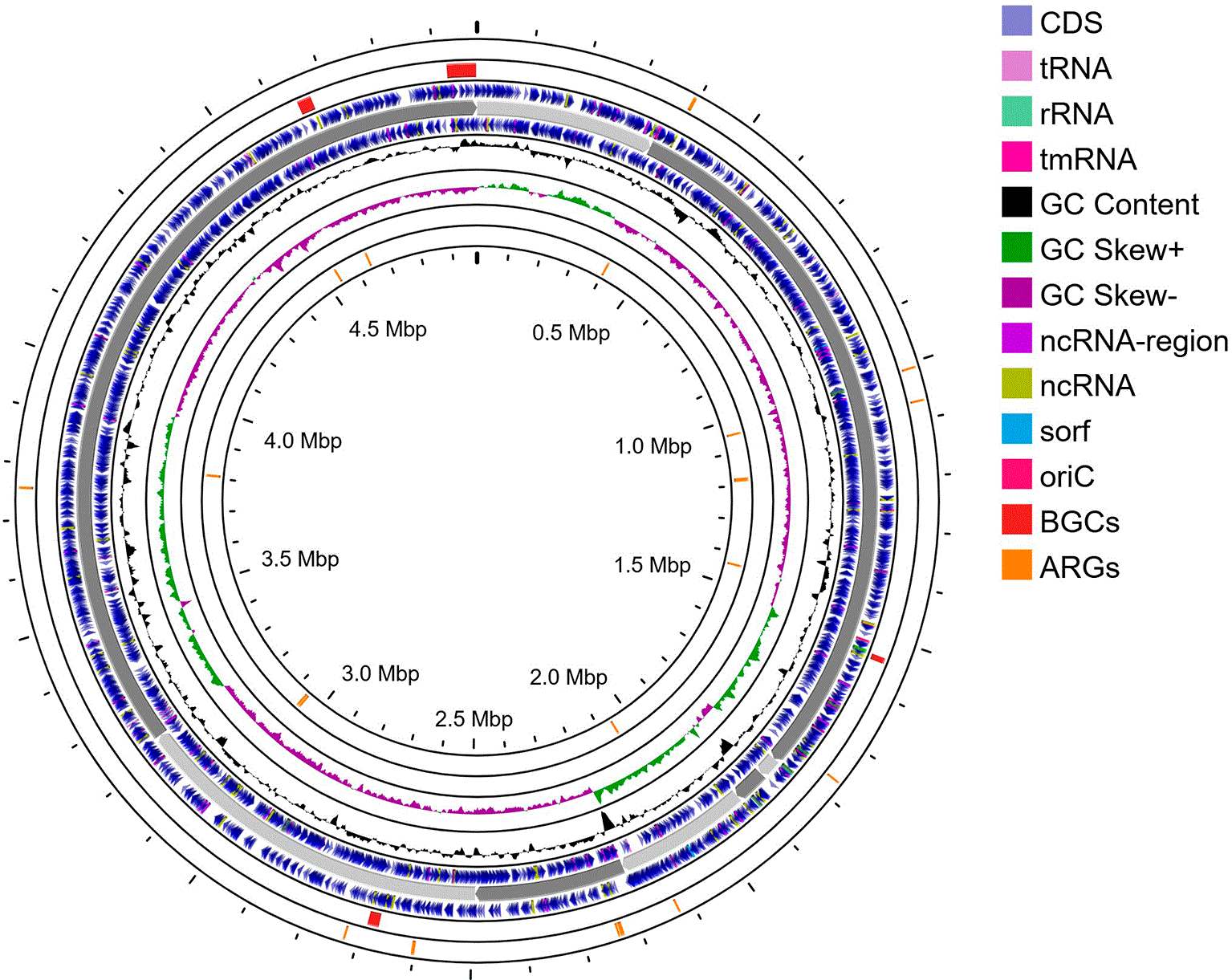
Tracks from the outside to the inside: ARGs on the forward strand; BGCs on the forward strand; CDS on the forward strand; contigs; CDS on the reverse strand; GC content; BGCs on the reverse strand (none detected); and ARGs on the reverse strand. Abbreviations: ARGs, antimicrobial resistance genes; BGCs, biosynthetic gene clusters; CDS, coding sequences.
In summary, this Genome Note describes a high-quality draft genome of the endophytic Kluyvera ascorbata strain PCL31 isolated from the medicinal plant Piper crocatum, together with its annotation, predicted biosynthetic gene clusters, and predicted antimicrobial resistance gene elements. The functional and clinical interpretations of these features would require dedicated experimental studies. The genome is made publicly available as a resource to support future functional, metabolomic, and antimicrobial resistance studies.
The article does not concern animals or human subjects nor carries ethical issues.
The reference specimen used for taxonomic identification of the plant is held at the Herbarium Bogoriense (BO), Directorate of Scientific Collection Management, National Research and Innovation Agency (BRIN), Soekarno Science and Technology Area, Jl. Raya Jakarta–Bogor Km. 46, Cibinong, Bogor 16911, Indonesia, under accession number BO-1475717 (Herbarium Bogoriense, n.d). The specimen can be accessed by contacting the herbarium.
Raw Oxford Nanopore reads have been deposited in the NCBI Sequence Read Archive under accession SRR38898151 (BioProject PRJNA1472441, BioSample SAMN60497367) (NCBI, 2026).
on Figshare: Underlying data for “High-quality draft genome sequence of endophytic Kluyvera ascorbata strain PCL31 isolated from Piper crocatum (red betel)” https://doi.org/10.6084/m9.figshare.32499168 (Sidhartha et al., 2026). This project contains the following underlying data:
• Contig statistics.
• Bakta annotation files (.gff3, .gbff, .faa, .fna).
• QUAST report.
• BUSCO full table.
• TYGS report.
• FastANI output.
• antiSMASH 8.0 region-level output (.gbk and HTML report).
• CARD-RGI output (.json and.txt).
• MOB-Recon output.
• PlasmidFinder output.
Data are available under the terms of the Creative Commons Attribution 4.0 International license (CC BY 4.0).
The authors would like to thank PaninBank, Satriabudi Dharma Setia Foundation (YSDS), i3L University, and the Department of Biochemistry, IPB University, for providing the facilities and laboratory instruments used in this study.
During the preparation of this work the authors used Claude (Opus 4.8) to improve readability and language. All outputs were carefully reviewed and edited by the authors as needed. The authors take full responsibility and accountability for the contents of the publication.
This work is funded by the Indonesian Endowment Fund for Education (LPDP) on behalf of the Indonesian Ministry of Higher Education, Science and Technology and managed under the EQUITY Program (Contract No: 59544/IT3.D10/PT.01.03/P/B/2025) assigned to Mega Safithri.
The funders had no role in study design, data collection and analysis, decision to publish, or preparation of the manuscript.
© 2026 Sidhartha E et al. This is an open access article distributed under the terms of the Creative Commons Attribution License, which permits unrestricted use, distribution, and reproduction in any medium, provided the original work is properly cited.
Download
Export To
metrics
| Views | Downloads | |
|---|---|---|
| F1000Research | - | - |
| PubMed Central Data from PMC are received and updated monthly. | - | - |
Citations
CITE
how to cite this article
Sidhartha E, Pratama R, Ng ER et al. High-Quality Draft Genome Sequence of Endophytic Kluyvera Ascorbata Strain PCL31 Isolated from Piper Crocatum (red betel) [version 2; peer review: 1 approved, 2 approved with reservations]. F1000Research 2026, 15:1073 (https://doi.org/10.12688/f1000research.183746.2)
NOTE: If applicable, it is important to ensure the information in square brackets after the title is included in all citations of this article.
track
receive updates on this article
Track an article to receive email alerts on any updates to this article.
Current Reviewer Status: ?
Key to Reviewer Statuses VIEW HIDE
ApprovedThe paper is scientifically sound in its current form and only minor, if any, improvements are suggested
Approved with reservations A number of small changes, sometimes more significant revisions are required to address specific details and improve the papers academic merit.
Not approvedFundamental flaws in the paper seriously undermine the findings and conclusions
Version 2
VERSION 2
PUBLISHED 21 Aug 2026
Revised
Reviewer Report 21 Oct 2026
Francisco Callejas-Hernández, Johns Hopkins University Bloomberg School of Public Health, Baltimore, Maryland, USA
Approved with Reservations
VIEWS 0
Are the rationale for sequencing the genome and the species significance clearly described?
Partly
Are the protocols appropriate and is the work technically sound?
Yes
Are sufficient details of the sequencing and extraction, software used, and materials provided to allow replication by others?
Yes
Are the datasets clearly presented in a usable and accessible format, and the assembly and annotation available in an appropriate subject-specific repository?
Yes
Competing Interests: No competing interests were disclosed.
Reviewer Expertise: Bioinformatics, genomics, transcriptomics, parasitology
CloseReviewer Report 08 Oct 2026
Arun Prasanna Nagarajan, King Abdullah University of Science and Technology (KAUST), Thuwal, Saudi Arabia
Approved
VIEWS 0
Are the rationale for sequencing the genome and the species significance clearly described?
Yes
Are the protocols appropriate and is the work technically sound?
Yes
Are sufficient details of the sequencing and extraction, software used, and materials provided to allow replication by others?
Yes
Are the datasets clearly presented in a usable and accessible format, and the assembly and annotation available in an appropriate subject-specific repository?
Yes
Competing Interests: No competing interests were disclosed.
Reviewer Expertise: Bioinformatics, NGS technologies, Phylogenomics, Molecular Biology, Genome Assembly, Transcriptomics
CloseVersion 1
VERSION 1
PUBLISHED 06 Jul 2026
Reviewer Report 03 Aug 2026
Mushtak T. S. Al-Ouqaili, Department of Microbiology, University of Anbar, College of Medicine, Ramadi City, Anbar Governorate, Iraq
Approved with Reservations
VIEWS 0
Are the rationale for sequencing the genome and the species significance clearly described?
Yes
Are the protocols appropriate and is the work technically sound?
Partly
Are sufficient details of the sequencing and extraction, software used, and materials provided to allow replication by others?
Yes
Are the datasets clearly presented in a usable and accessible format, and the assembly and annotation available in an appropriate subject-specific repository?
Yes
References
1. Dheyab M, Oladzadabbasabadi N, Aziz A, Khaniabadi P, et al.: Recent advances of plant-mediated metal nanoparticles: Synthesis, properties, and emerging applications for wastewater treatment. Journal of Environmental Chemical Engineering. 2024; 12 (2). Publisher Full TextCompeting Interests: No competing interests were disclosed.
Reviewer Expertise: Microbiology, Molecular Biology. Molecular Microbiology. Molecular diagnosis of infectious disease
CloseAlongside their report, reviewers assign a status to the article:
| Invited Reviewers | |||
|---|---|---|---|
| 1 | 2 | 3 | |
| Version 2 (revision) 21 Aug 26 | read | read | |
| Version 1 06 Jul 26 | read | ||
Sign up for content alerts
Alongside their report, reviewers assign a status to the article:
Approved - the paper is scientifically sound in its current form and only minor, if any, improvements are suggested
Approved with reservations - A number of small changes, sometimes more significant revisions are required to address specific details and improve the papers academic merit.
Not approved - fundamental flaws in the paper seriously undermine the findings and conclusions