Просмотр новости
Найдите то, что Вас интересует
 Спутники
 РН
 SpaceX
 Роскосмос
 NASA
СпутникиРНSpaceXРоскосмосNASAThe company’s third such facility will focus on commercial production for genetically modified organs, if and when United Therapeutics receives federal approval for its xeno-organs.
Provided/United Therapeutics
For years, United Therapeutics has pioneered work in the medical field of xenografting, transplanting genetically modified animal organs into humans. Now, the company is opening a Houston facility with the goal of commercializing its products.
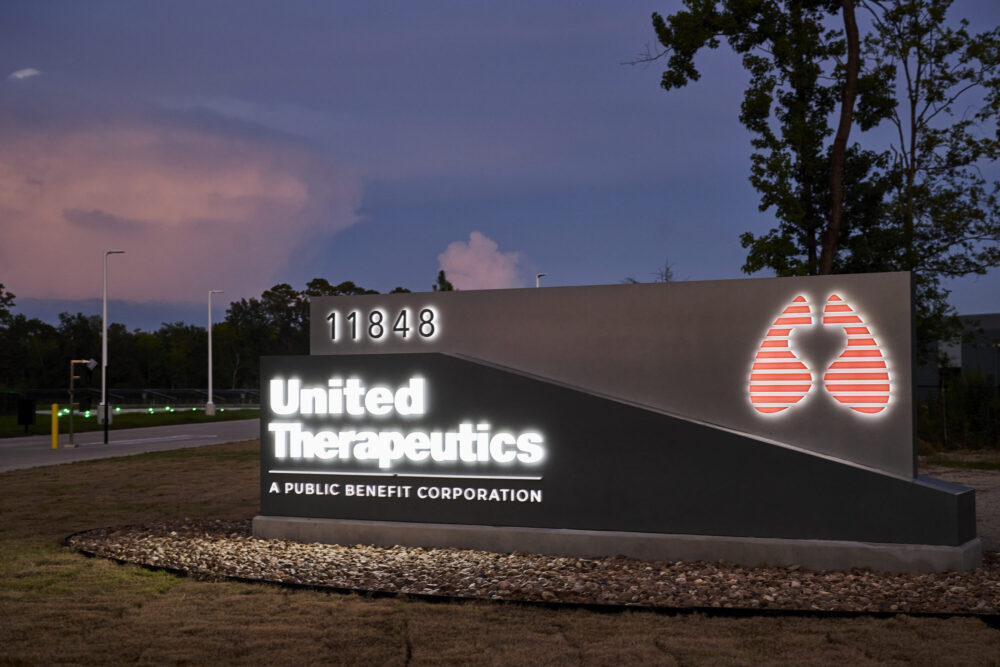
On Tuesday, United Therapeutics opened the doors to its new Houston facility, its third Designated Pathogen-Free facility. While the company's xeno-organs await approval from the Food and Drug Administration, this facility, alongside another one in Minnesota, is preparing for commercial production to distribute if and when the company receives FDA clearance.
"What we don't want to do is have this approved product, but then not have the facilities to be able to commercialize, meaning to be able to produce enough organs to begin helping the many patients in need," Dr. Jayme Locke, Vice President and Chief Medical and Surgical Officer for xenotransplantation at United Therapeutics, told Houston Public Media.
Sign up for the Hello, Houston! daily newsletter to get local reports like this delivered directly to your inbox.
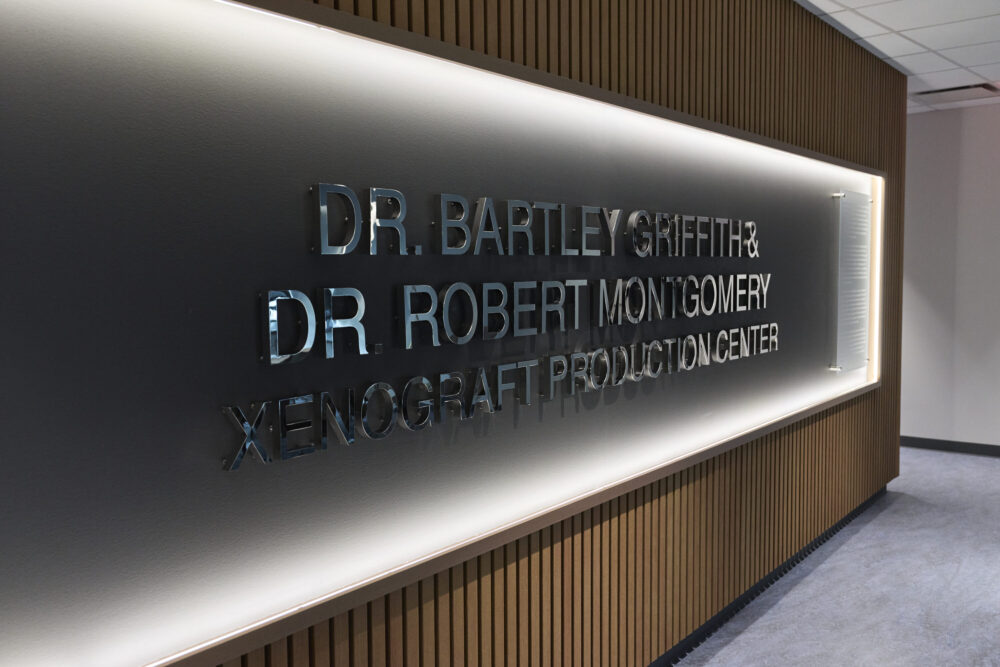
In recent years, United Therapeutics has garnered international attention for its work in xenografting. In 2022, Dr. Bartley Griffith transplanted one of the company's xenohearts. Last year, Dr. Robert Montgomery transplanted a xenokidney to a patient with end-stage renal disease, as part of a United Therapeutics trial. The new Houston facility is named for Drs. Griffith and Montgomery.
Provided/United Therapeutics
In the early 2010s, geneticists Jennifer Doudna and Emmannuelle Charpentier discovered a sort of "genetic scissors" that allowed researchers to change the DNA of animals, plants, and microorganisms with high precision. They were awarded the Nobel Prize in Chemistry in 2020.
"I think that's part of why you're seeing this real renaissance in xenotransplantation because what used to take a really long time to do can now be done very quickly," Locke said.
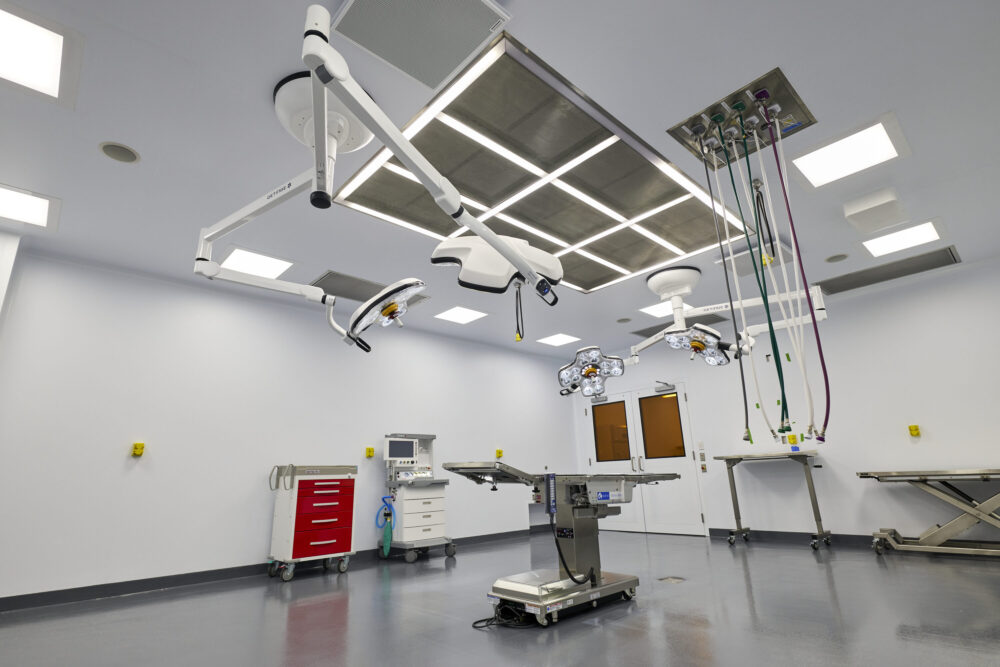
At United Therapeutics, the genes of pigs are genetically modified to make their organs compatible with humans. Those pigs are then raised in Designated Pathogen-Free facilities, after which their organs could be used, hypothetically, for a transplant.
United Therapeutics is awaiting a Biologics License Application from the FDA for three xenotransplantation products, called UHeart, UKidney, and UThymoKidney. UKidney and UHeart each come from a pig with 10 gene edits — six human genes that are added in and four pig genes that are "knocked out." UThymoKidney comes from a pig with a single gene edit, plus tissue from the pig's thymus, which produces white blood cells, which conditions the recipient's immune system to believe the thymus is its own, reducing the risk of rejection.
Provided/United Therapeutics
When successful, xenotransplantation is a stopgap for the organ donation industry. The United States estimates nearly 110,000 people are on the national transplant list, and 12 people die each day waiting for an organ transplant.
The vast majority of patients on the list — some 95,000 — are in need of a kidney. In the U.S., states in the south and southeast have higher rates of kidney disease and deaths from it.
"Houston not only gives us access to this large metropolitan area with the necessary infrastructure for our logistics," Locke said, "but also puts us in close proximity to a population that is in dire need of these organs."
| # | Наименование новости | Тональность | Информативность | Дата публикации |
|---|---|---|---|---|
| 1 | This company pioneered transplants with genetically modified pig organs. Now they’ve opened a Texas office | 0 | 10.35 | 22-10-2026 |
| 2 | На МКС напечатали живые ткани почек и печени С помощью ... | 5 | 7 | 18-07-2026 |
| 3 | На МКС впервые напечатали ткани человеческой печени и почки Компания ... | 7 | 8 | 13-07-2026 |
| 4 | Fort Bend County approves $10B Tesla deal with 10-year tax break tied to 8,700 jobs | 0 | 6.83 | 23-10-2026 |
| 5 | Taipei Times: Kratos намерена начать совместное производство БПЛА на Тайване | 0 | 10 | 17-10-2026 |
| 6 | Китайская Unitree Robotics начала процесс выхода на биржу | 0 | 0 | 18-07-2025 |
| 7 | Space Forge takes first step into US manufacturing | 0 | 6.67 | 18-08-2026 |
| 8 | Chinese robot maker’s IPO 5,500 times oversubscribed by retail investors | 0 | 14.76 | 11-08-2026 |
| 9 | SpaceX and Tesla to Build Natural Gas Plants and Battery Arrays for $16.8 Billion Texas Chip Factory | 0 | 5.06 | 08-08-2026 |