Просмотр новости
Найдите то, что Вас интересует
 Спутники
 РН
РН SpaceX
 Роскосмос
 NASA
NASA
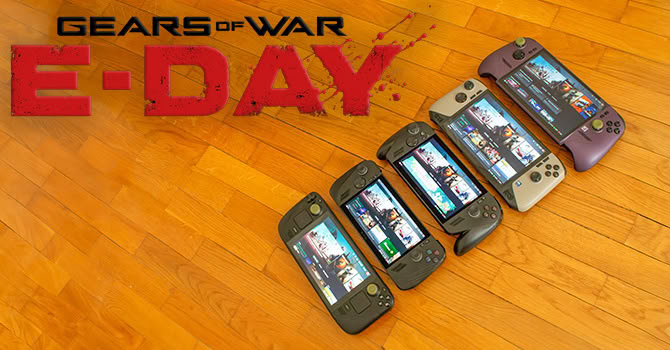
СпутникиРНSpaceXРоскосмосNASAGears of War: E-Day takes us fourteen years before the original Gears of War, to the night the Locust Horde erupted from the ground across Sera initiating the bloody Locust War. The game is developed by The Coalition in Unreal Engine 5, and our handheld performance review evaluates how it performs on the most popular handheld PCs on the market.
Gears of War: E-Day is the prequel to the first Gears of War game, taking place during and after Emergence Day, when the Locust Horde first breached the surface of Sera and started the bloody Locust War. You play as Marcus Fenix (or another character if you decide to play the campaign in co-op), who's stranded in the city of Kalona with Dom and two other characters during E-Day. Their Bravo squad is initially just trying to survive amidst the chaos and save civilians, later helping Gears forces defend the city.
The Coalition, a studio made up of veteran developers who have lots of experience with Unreal Engine, used Unreal Engine 5 to create Gears of War: E-Day, and the game features all the UE5 goodies. You've got Nanite, Lumen (which is always on, in either software or hardware form), and MegaLights, along with NVIDIA's RTX Mega Geometry, making it the first Unreal Engine 5 game to support the feature.
Gears of War: E-Day comes with support for all three major upscalers—FSR, XeSS, and DLSS—along with UE5's own TSR, and you can also use all three major frame gen solutions. Note that while we were able to choose "FSR 4" on both AMD and Intel handhelds, the game falls back to an older FSR version if your hardware doesn't support FSR 4.
Our handheld performance review will test how the game runs on some of the most popular PC handhelds around, and we're also going to provide optimized settings for each device that's part of our benchmark suite.