Просмотр новости
Найдите то, что Вас интересует
 Спутники
 РН
РН SpaceX
 Роскосмос
 NASA
NASA
СпутникиРНSpaceXРоскосмосNASA
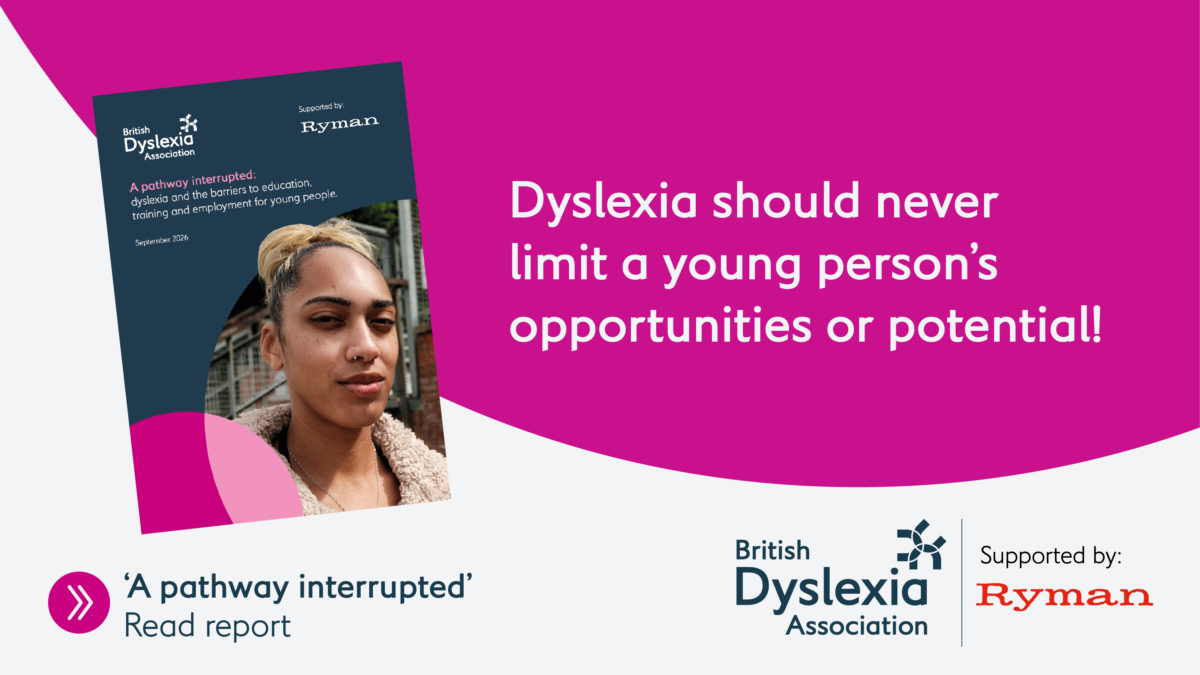
With more than one million young people in the UK currently not in education, employment or training (NEET), new British Dyslexia Association research finds late diagnosis and poor support at school are pushing dyslexic young people out of education, training and work.
The report, supported by Ryman, identifies a chain reaction: late or missed diagnosis leads to poor support in school, driving disengagement and lower attainment. This damages confidence, narrows the routes into further education, training and employment, and leaves many young people at greater risk of becoming NEET.
Being NEET describes a young person’s current situation in relation to education, employment and training, but not necessarily how they see themselves. Many do not identify as ‘NEET’, instead seeing themselves as looking for work, between jobs or courses, or working out what they want to do next.
To watch this video, you must consent to YouTube's cookies. or read more in our Cookie Policy.
<div class="flex-container video-embed"> <iframe title="Embedded video content" src="https://www.youtube.com/embed/lfJSp-ZGNcs?rel=0" frameborder="0" allowfullscreen></iframe> </div>
School is not preparing dyslexic young people for adult life:
The impact goes beyond the classroom:
Among those who identified as NEET, 89% said their school experience limited their future opportunities, and just 6% felt school had prepared them well for the workplace.

Theo Paphitis, Vice President of the British Dyslexia Association, said:
“This report shines a light on a group of young people who are too often overlooked. Too many dyslexic young people leave education and then lose their way, falling into the gap between school, further education, training and work. We do not even know how many NEET young people are dyslexic. Many will never have been identified. If we are serious about tackling the NEET crisis, dyslexia cannot be left out of the conversation.”
The BDA is calling for
About the research
The report was produced by the British Dyslexia Association in partnership with M·E·L Research. It combines a survey of 257 dyslexic young people aged 16 to 24 in England with in depth interviews with ten dyslexic young people aged 18 to 24 who are all NEET.
| # | Наименование новости | Тональность | Информативность | Дата публикации |
|---|---|---|---|---|
| 1 | New Report: GCSE attainment gap for dyslexic pupils unchanged after more than a decade | 0 | 5.86 | 09-07-2026 |
| 2 | SEND white paper - Our official response. | 0 | 9.23 | 25-06-2026 |
| 3 | BDA Blogs: Dyslexia does not stop when school does | 0 | 7.34 | 05-10-2026 |
| 4 | BDA seeks partners to deliver coaching and workplace support for dyslexic adults | 0 | 6.43 | 24-09-2026 |
| 5 | British Dyslexia Association invites tenders for adult dyslexia screening tools | 0 | 6.51 | 26-08-2026 |
| 6 | BDA Blogs - Functional Skills Qualifications: the route too many parents only hear about after GCSE failure | 0 | 5.5 | 04-08-2026 |
| 7 | Our response to the Disabled Students Allowance consultation on Assistive Techonology | 0 | 9.51 | 22-06-2026 |
| 8 | Dyslexia Awareness Week 2026 | 0 | 20.83 | 17-09-2026 |
| 9 | A warm welcome to our new trustees | 0 | 9.23 | 24-07-2026 |
| 10 | BDA Blogs: Common adult dyslexic challenges no one talks about (from someone who lives them too) | 0 | 6.2 | 15-07-2026 |