Просмотр новости
Найдите то, что Вас интересует
 Спутники
 РН
РН SpaceX
 Роскосмос
 NASA
NASA
СпутникиРНSpaceXРоскосмосNASALearn how to embed testimonials on your website, compare dynamic widgets vs manual methods, and keep your social proof fresh and conversion-ready.
Did you read somewhere that you need to embed testimonials on your website? It’s true! But you have to do it just right, so they dynamically update and keep your site fresh.
Adding testimonials is easy once. However, you have to think about maintaining their relevancy, and they should also match your brand style and colors.
So, instead of manually adding static testimonials one by one, you have to learn how to embed testimonials using a third-party review management platform.
For instance, EmbedSocial will connect to all relevant review sites, including Google and all popular social media platforms, to retrieve feedback your customers might have left you. Then, it will help you manage and display testimonials on your website via a testimonial widget.
Keep on reading below, as I cover both methods. Plus, I tell you where to place your testimonials, which formats work best, and why you need dynamic testimonial widgets.
What “embed testimonials” really means?When people search to embed testimonials, they may be describing a few things:
Sometimes they mean adding a few customer quotes to a homepage. Sometimes they mean using a testimonial plugin for website pages. And very often, they also want to embed Google reviews on website pages in a format that feels more curated and conversion-friendly.
In practice, embedding testimonials usually means one of these:
That distinction matters because the method you choose changes how much work your testimonial section will require later.
A manually added quote may look fine today. But if you want to add testimonials next month, reuse them on three pages, or keep the section visually consistent across your site, manual updates start to feel slow very quickly.
The 2 best ways to add testimonials to a websiteThere are two methods of adding testimonials to your website: manually finding and adding them via a customizable block in your website builder (or via HTML code if you have the skills for it), or there’s a better way: using dynamic third-party website widgets.
If you only need to show a few quotes on a simple page, manual embedding can be enough.
But, if you’re looking to scale and/or always deliver fresh customer feedback across your home, product, and landing pages, you’re better off finding great review management software that will automatically keep on collecting the freshest testimonials for you.
This is the modern method:
Instead of pasting testimonials into each page manually, you create a testimonial widget, style it using AI, embed it where needed, and let it work on your behalf.
That is what makes this method better suited for growing websites. But before using it, you should create your EmbedSocial trial account (there’s a free review widget, too):
Step 1: Build your testimonial widget with AIStart by describing the kind of testimonial widget you want in the AI prompt. Based on your input, the AI builder can recommend layouts, styling, and interaction patterns that fit your brand and the type of social proof you want to show:
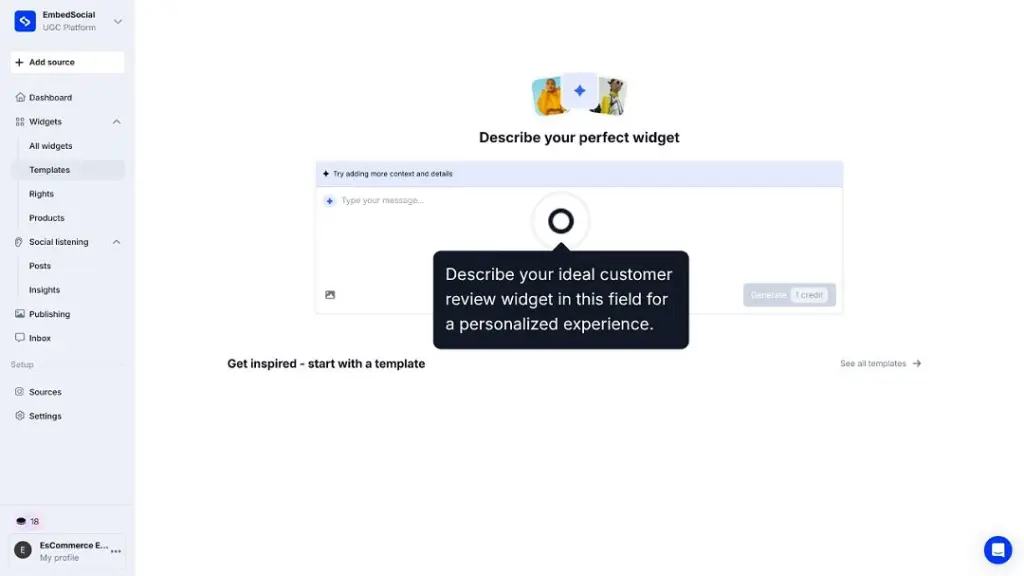
Next, click Connect your source to bring in the testimonials or reviews you want to display. Depending on your setup, this can include direct testimonial submissions, customer reviews, or other approved feedback sources:
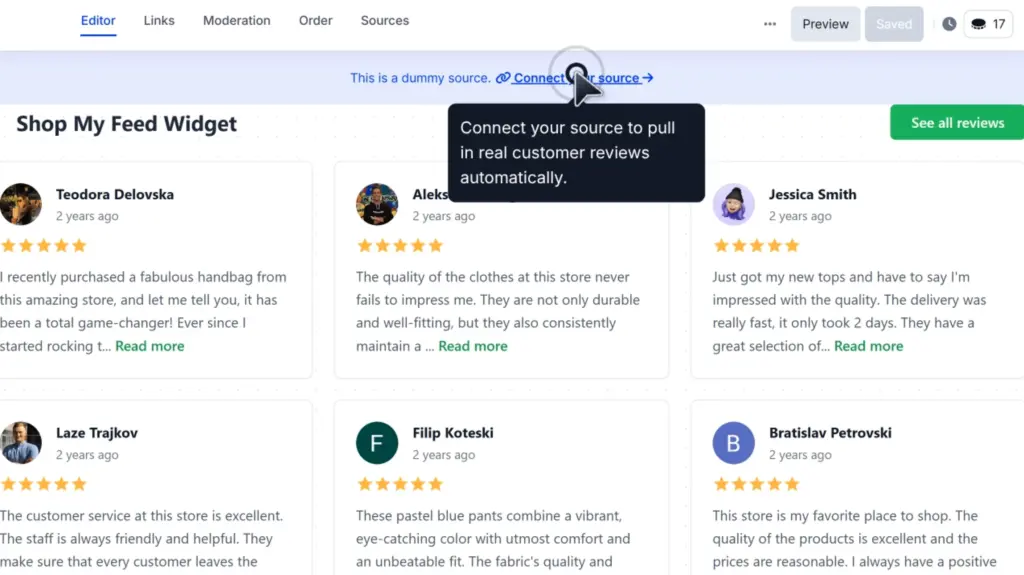
Note: You can also add content manually if you want more control over which testimonials appear in the widget.
Step 3: Choose a template that fits your siteBrowse the available templates and select one that matches your website design. You can choose from formats like sliders, grids, carousels, or Wall of Love layouts, depending on how you want the testimonials to appear:
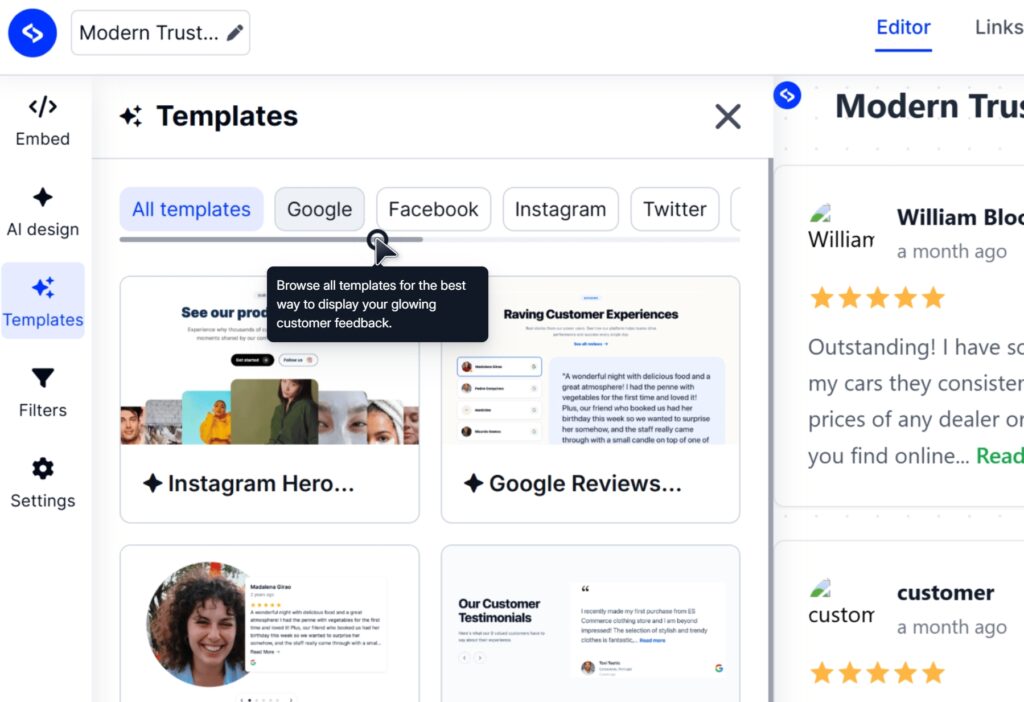
Once you click Use template, your widget will populate with your testimonial content so you can immediately see how it looks on the page.
Step 4: Refine the widget with AIAfter selecting a template, you can continue improving the design with additional AI prompts. This makes it easy to adjust the look, structure, and presentation of the widget until it fits your site more closely:
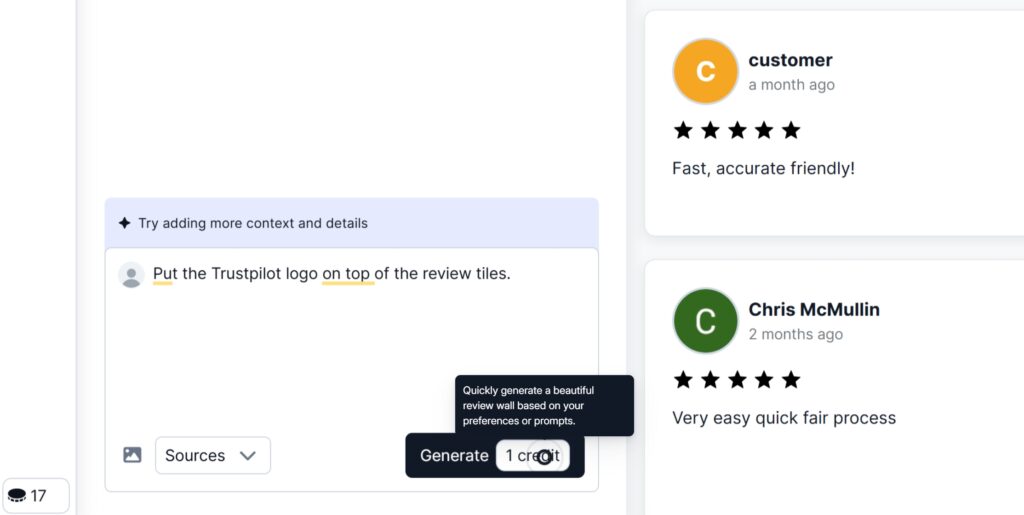
When your widget is ready, go to the Embed tab and copy the code. This code is what you will use to place the testimonial widget anywhere on your website:
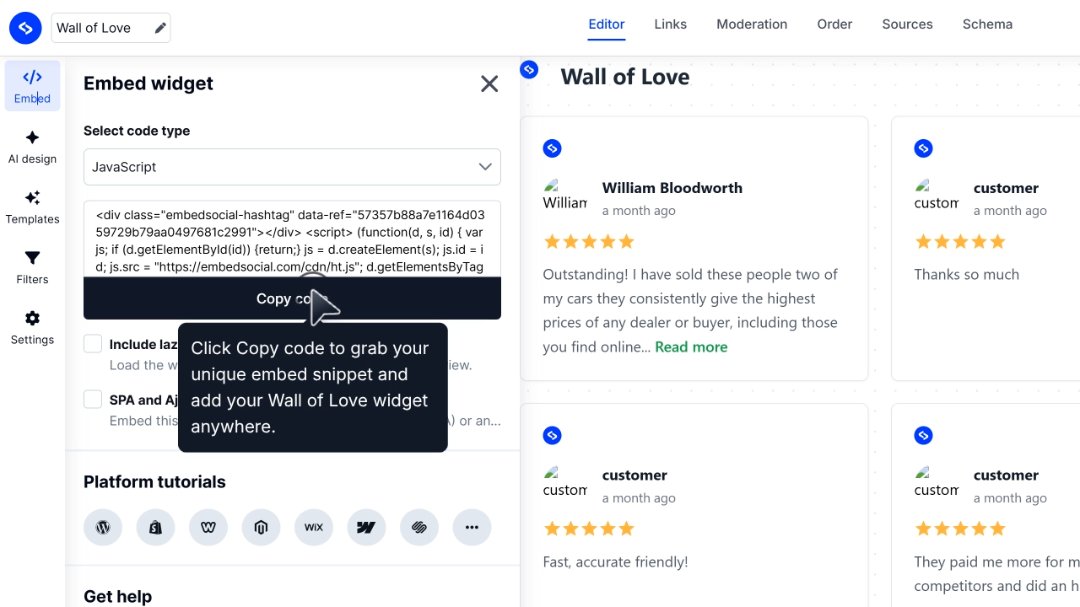
Finally, open the page where you want the testimonials to appear and paste in the widget code. On WordPress, for example, you can do this with a simple Custom HTML block.
That’s it. You now have a live testimonial section on your website that looks more polished, is easier to manage, and helps strengthen trust with potential customers.
Here’s one of our ready-to-go testimonial widget templates:
How to embed testimonials across different website builders?The process is similar across all popular CMS and website platforms:
Method 2: Add testimonials manuallyThis is the basic fallback method that’s sufficient now and then.
Namely, you can add testimonials by hand using text blocks, quote blocks, page builder sections, or custom HTML. It works, and for some small sites, that is enough.
However, unlike EmbedSocial’s plug-and-play widgets that only require you to copy a single code, this method requires a tad more manual actions and knowledge:
Once you’re done, your new page element will appear where you added it, but it’s not a flexible solution, since you will have to update it manually with new feedback.
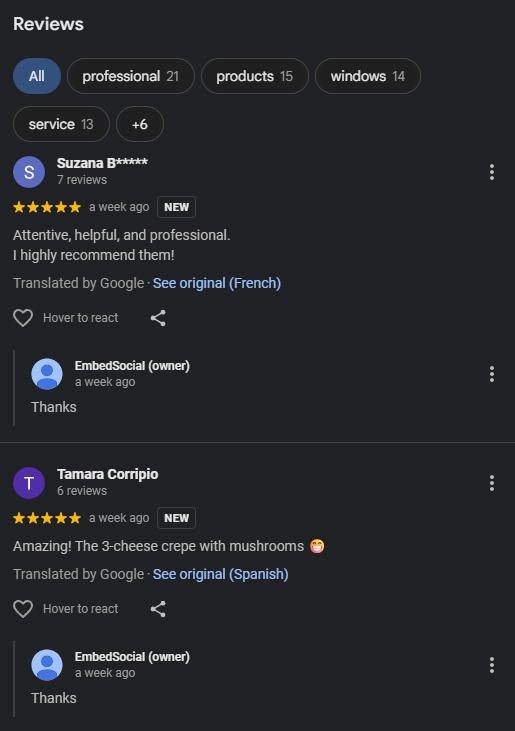
For instance, here’s a screenshot of two Google reviews. As you can see, you cannot change the layout, colors, aspect ratio, or any other design element:
When does manual embedding still make sense?Note: this method stays easy only while the testimonial count stays small.
Considering the above, you can embed reviews on website manually in a few cases:
That said, the limitations show up quickly.
Where manual testimonials start breaking downBest practices to keep in mind here:
Manual embedding is not wrong. It is just harder to maintain once the website grows beyond a few brochure-style pages, and you need new prospective clients.
In general, manual layouts work best when you only need a few static quote cards. If you want more variety, easier updates, and more polished display options, dynamic widgets through a tool like EmbedSocial give you a lot more flexibility.
Let’s summarize all I’ve shared about these two methods above:
Method 1: Advanced widget via EmbedSocial
Method 2: Manual static testimonials
Initial setup
Fast
Fast for a few quotes
Updating later
Easy
Manual every time
Design consistency
High
Varies page by page
Scalability
Strong
Weak
Multi-page use
Easy
Tedious
Freshness
Easy to maintain
Often becomes stale
Moderation
Built for it
Manual and fragmented
Best for
Growing sites and active marketing pages
Small sites with a few fixed quotes
Where to display testimonials on your website?Remember: Dynamic testimonial widgets matter when your site has multiple decision points. If you want to add social proof to your homepage, pricing page, service pages, and landing pages without managing each section separately, this method saves a lot of time.
Placement matters almost as much as the testimonial itself. A great quote in the wrong place can do very little. A relevant quote near the right decision point can do a lot.

The homepage is often where first impressions form, so this is one of the strongest places to embed testimonials. Benefits include:
Pricing pagePro tip: Put your strongest proof above the fold or directly below the hero section so visitors see trust signals before they begin doubting your claims.
This is where visitors start weighing cost against confidence. Benefits include:
Landing pagesPro tip: Use quotes about value, ROI, ease of use, or results. Pricing pages need reassurance more than generic praise.
Landing pages work best when every element supports one focused action. Benefits include:
Product or service pagesPro tip: Match the testimonial to the exact offer on the page. A highly relevant quote will outperform a generic glowing review.
These pages need proof tied to the exact thing being considered. Benefits include:
About pagePro tip: Use testimonials that mention the specific product, service, pain point, or result tied to that page.
The About page is less about features and more about trust. Benefits include:
Checkout or cartPro tip: Prioritize testimonials about responsiveness, reliability, expertise, or working relationship, not just feature praise.
At this stage, the goal is not storytelling. It is a reassurance. Benefits include:
Blog postsPro tip: Keep testimonials short here. A quick reassurance quote is stronger than a large widget that distracts from checkout.
Testimonials can work inside blog content, but only when they belong there. Benefits include:
Pro tip: Only add testimonials when they strengthen the article naturally. Forced social proof inside a blog post can feel overly promotional.
A sidebar can carry light trust signals across multiple pages. Benefits include:
Pro tip: Use a compact quote card or small rotating testimonial instead of a large, heavy widget.
The footer is not your primary proof zone, but it can still help. Benefits include:
Dedicated testimonials pagePro tip: Use footer testimonials as supporting proof, not as your main testimonial section.
This is where you can go broader and show a fuller proof library. Benefits include:
Best testimonial formats to embedPro tip: Mix formats here, such as written quotes, review-style cards, video clips, logos, or filtered widgets, so the page feels curated instead of repetitive.
Not every testimonial format belongs on every page. The right layout depends on how much proof you want to show, how fast visitors need to understand it, and how much space you have:
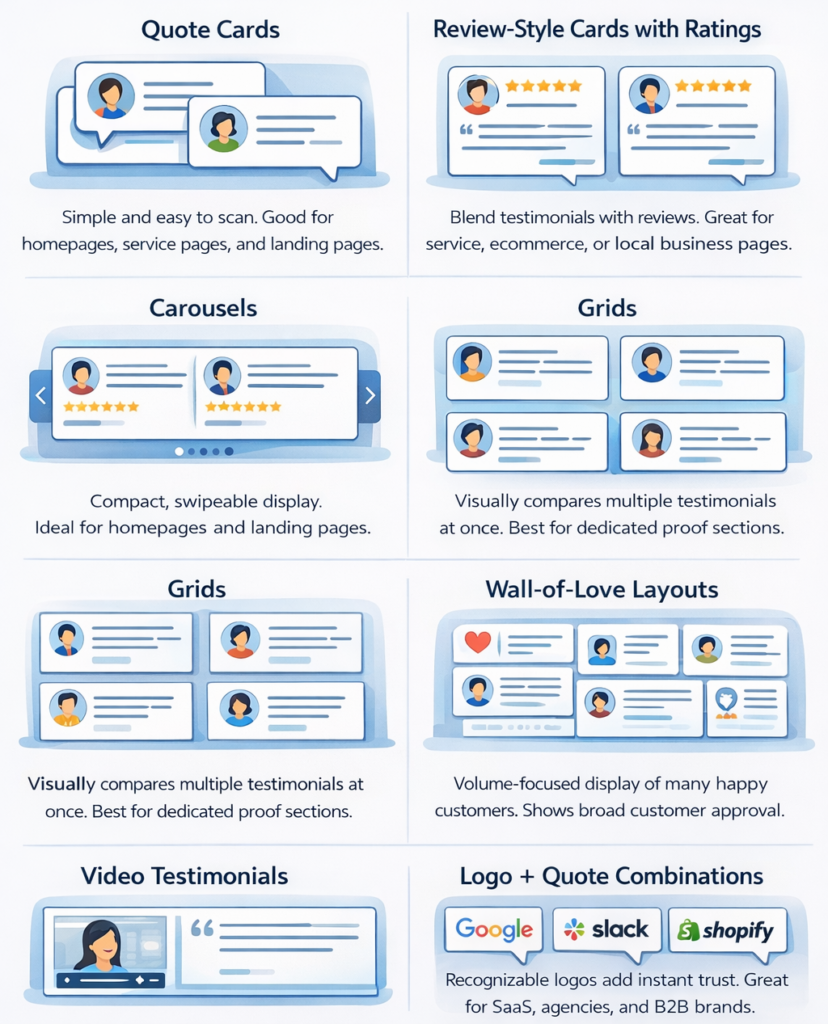
Quote cards are the simplest format to display testimonials. They are easy to scan, easy to style, and work well on homepages, service pages, and landing pages where you want a few curated quotes to support the main message.
Review-style cards with ratingsThese are useful when you want testimonials to feel closer to recognizable customer feedback. They add credibility and work especially well when you want to blend testimonials with reviews on service, ecommerce, or local business pages.
CarouselsCarousels are a strong choice when space is limited, but you still want to show more than one testimonial. They keep the layout compact, which makes them useful for homepages, landing pages, and other sections where screen space is tight.
GridsGrids work best when you want to show several testimonials at once without hiding them behind clicks or swipes. They are easier to compare visually and are often the better option for dedicated proof sections.
Wall-of-love layoutsA wall-of-love layout creates the impression of broad, active customer approval. It works well when you have a larger volume of positive feedback and want your testimonial section to feel fuller and more dynamic.
Video testimonialsVideo testimonials take more effort to collect, but they can be much more persuasive than text alone. They are especially effective when buyers need stronger reassurance, such as in B2B, service-based, or higher-ticket purchase journeys.
Logo + quote combinationsThis format is especially effective when customer recognition adds trust on its own. Pairing a strong quote with a recognizable company logo can make the testimonial feel more credible at a glance, especially for SaaS, agencies, and B2B brands.
You could check out several different review management platforms, but we’ve developed EmbedSocial to include everything you need and more into one complete package.
Here are some of the benefits you get:
With EmbedSocial, you’re building a testimonial system that can help you collect, curate, approve, style, and publish social proof everywhere it can make an impact.
You can use different layouts depending on the page and the goal. A homepage might need a website carousel. A dedicated testimonial page might work better as a wall-of-love layout. A landing page may only need a few highly relevant quotes near the main CTA.
Best of all: You don’t need to rebuild the section every time your best proof changes!
Why businesses embed testimonials?Before deciding where to place testimonials, it helps to understand why businesses add them in the first place. Here are just a few of the benefits:
A hidden reviews page rarely works as hard as testimonials placed directly where decisions happen. That is why embedded testimonials usually outperform proof that sits off to the side or lives on a separate platform, such as Google, Trustpilot, and others.
Collect testimonials strategically, then link outTo get reliable and impactful testimonials, you need the right timing, the right prompt, and the right level of specificity. A quote like “Great service, highly recommend” is usable. A quote that explains the problem, result, or experience is much stronger.
So, think about these best practices to get more testimonials:
The difference between a testimonial section that converts and one that gets ignored usually comes down to execution. This is how you execute to perform:
1. Make testimonials believableBenefits of doing this well:
Best practices:
Benefits of doing this well:
Best practices:
Benefits of doing this well:
Best practices:
Benefits of doing this well:
Best practices:
If you only need to embed a few testimonials once, manual sections can work.
But most businesses need new offers, build new landing pages, refresh homepages, update pricing pages, and collect better customer proof over time. That is where manual testimonial sections start becoming a maintenance problem instead of a trust asset.
Dynamic testimonial widgets like EmbedSocial’s solve that issue. They make it easier to keep your proof current, visually consistent, and reusable across all your pages.
The best long-term advice is simple: do not choose the method that is easiest only on day one. Choose the method you can still manage six months from now.
If your site is growing and you want social proof that stays polished without constant page edits, EmbedSocial is the better place to start.
| # | Наименование новости | Тональность | Информативность | Дата публикации |
|---|---|---|---|---|
| 1 | 10 Best Social Media Widgets for Websites (2026) | 0 | 13.31 | 31-03-2026 |
| 2 | How to Embed YouTube Live on Your Website in 2026? (Step-by-Step) | 0 | 9.79 | 12-02-2026 |
| 3 | How to Track LinkedIn Mentions in 2026 | 0 | 11.73 | 08-07-2026 |
| 4 | How to Get Trustpilot Reviews in 2026? | 0 | 11.9 | 12-03-2026 |
| 5 | How to Embed Video Gallery on Websites [+ 5 Widget Templates] | 0 | 9.11 | 26-02-2026 |
| 6 | How to Create AI UGC Widgets for the Ultimate Social Media Feed | 0 | 7.57 | 24-10-2025 |
| 7 | Top 10 Image Carousel Templates for Your Website in 2026 | 0 | 15.15 | 13-02-2026 |
| 8 | New Instagram Features in 2026 [+Latest Edits Updates] | 0 | 7.74 | 26-01-2026 |
| 9 | 8 Social Media Video Ideas to Stand Out in 2026 | 0 | 12.63 | 24-01-2026 |
| 10 | Web Scraping vs API for Social Media Data: Which Is Better for Brands? | 0 | 5.75 | 19-03-2026 |