Просмотр новости
Найдите то, что Вас интересует
 Спутники
 РН
РН SpaceX
 Роскосмос
 NASA
NASA
СпутникиРНSpaceXРоскосмосNASAThe Boston building at 89 Heath Street has long had beverages in its bones. For years, a soda and beer equipment company operated out of […]
The post New England’s First Soju Distillery Opens in Boston appeared first on Boston Magazine.
Namu Distilling Company, which is also producing a unique gin, brings cocktails and Korean snacks to Mission Hill.
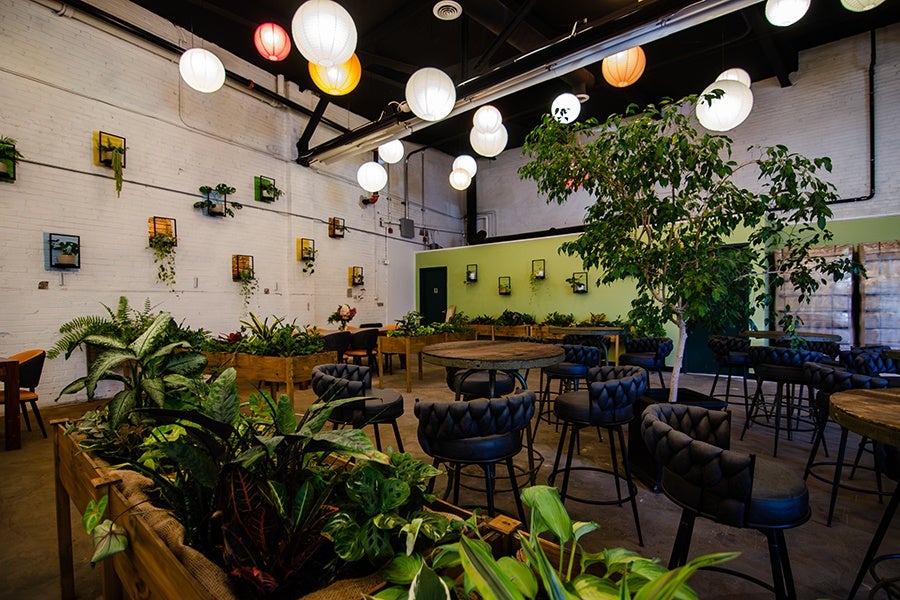
Namu Distilling Co. / Photo by Rachel Leah Blumenthal
The Boston building at 89 Heath Street has long had beverages in its bones. For years, a soda and beer equipment company operated out of that Mission Hill address. In the neighborhood, more drinks: Canada Dry bottled ginger ale down the block; the nearby nexus of Jamaica Plain and Roxbury was once home to many breweries. So it’s fitting that legacy continues with the opening of New England’s only soju distillery, Namu Distilling Company, a new destination for scratch-made spirits (including fermented rice-based gin), anju (Korean drinking snacks), and cocktails that reference Rihanna—you’ll want to sing the refrain of “Disturbia” when you order the Plum Cheong Dee Dum Dum Dum Dee Dum Dum.
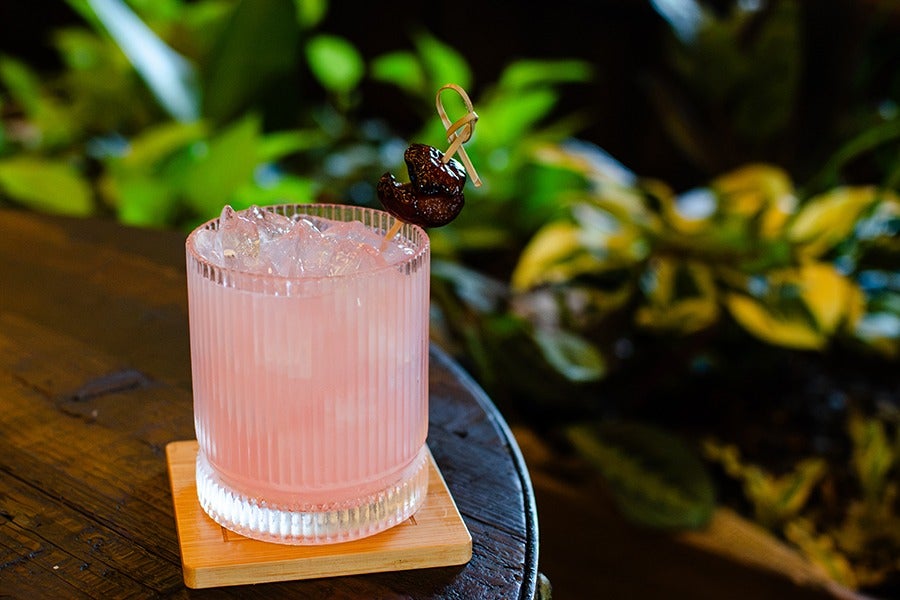
Namu Distilling Co.’s Plum Cheong Dee Dum Dum Dum Dee Dum Dum, with plum, gin, an in-house Suze-inspired liqueur, and carbonation. / Photo by Rachel Leah Blumenthal
Namu’s Instagram bio sums up what else makes this place’s arrival special: “First and only Korean-American and LGBTQ distillery in MA, created by scientists who love cocktails.” Those scientists are married cofounders Will Blessing and Josh Moss, who met about eight years ago while earning graduate degrees. “Once upon a time, we wanted to be professors,” says Blessing, who studied chemical biology, “but we realized that it wasn’t the trajectory that we wanted to follow.” Moss, meanwhile, studied chemical engineering as an undergraduate and atmospheric chemistry in graduate school, giving him a very relevant-to-distillation background in, as he explains, “separation of compounds based on volatility, boiling point, and things like that.”
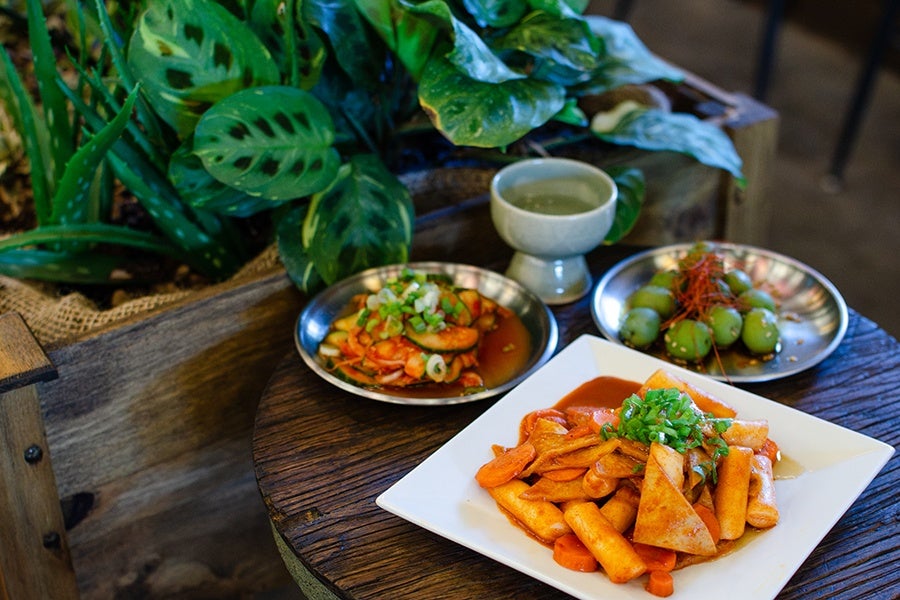
Namu Distilling Co. features an ever-changing menu of anju, Korean drinking snacks, like the tteokbokki, cucumber salad, and olives pictured here. Namu’s soju cups were made by local ceramic artist Sang Jeong Lee. / Photo by Rachel Leah Blumenthal
They both decided to pivot and took corporate jobs. “That got old pretty quickly,” says Blessing. “We were really missing that creative element. Then, the pandemic happened, and we were all looking for hobbies.” Blessing, who has Korean heritage, was a longtime home brewer of makgeolli, Korean rice wine, so the duo really leaned into the process, and a path forward became clear. Starting a distillery would make good use of their chemistry and engineering backgrounds but also let them be creative in a way the corporate world didn’t.
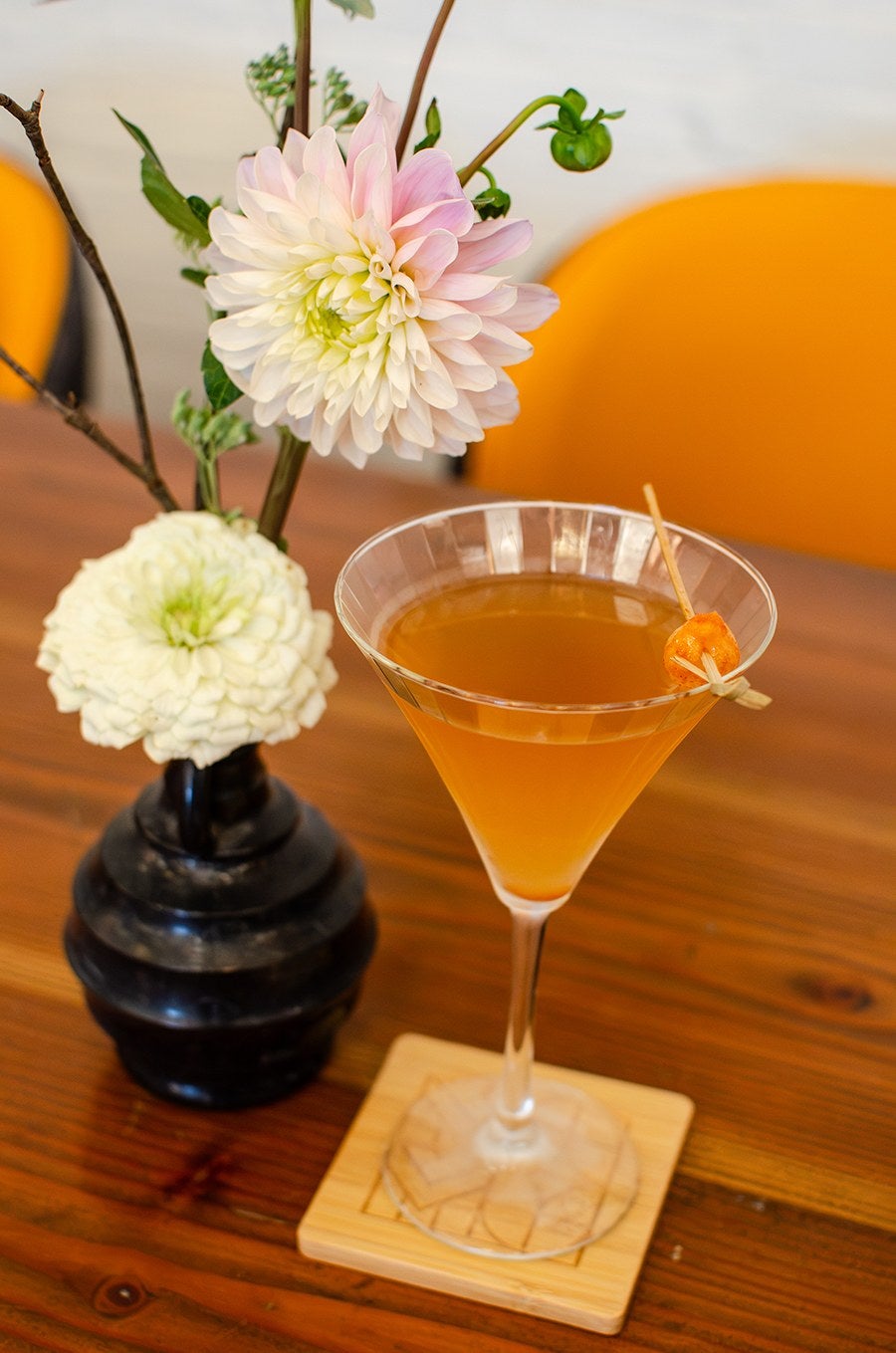
Namu Distilling Co.’s kimchi Gibson, with gin, apricot-osmanthus cordial, kimchi brine, and kimchi onion. / Photo by Rachel Leah Blumenthal
There weren’t any distilleries in New England creating soju, which is traditionally made from fermented rice, so Blessing and Moss found an unoccupied niche building a Korean-American craft distillery. Emphasis on craft. This isn’t your favorite green-bottle soju: “Not that there’s anything wrong with it,” says Moss. “Time and place for everything.” In addition to soju, Namu produces fermented rice-based gin featuring botanicals from New England and Korea. The two regions have a bit of shared terroir since they’re not too far latitudinally apart, as Blessing points out. “It’s a really unique blend of botanicals” that includes citrus peel, angelica root, perilla, jujube, a wildflower called mullein, and more, giving the gin floral, fruity notes, says Moss, adding that he and Blessing are growing some of the botanicals themselves. (There’s juniper, too, of course—that’s the definition of gin—but don’t expect the traditional juniper-forward taste of, for example, a London dry.)
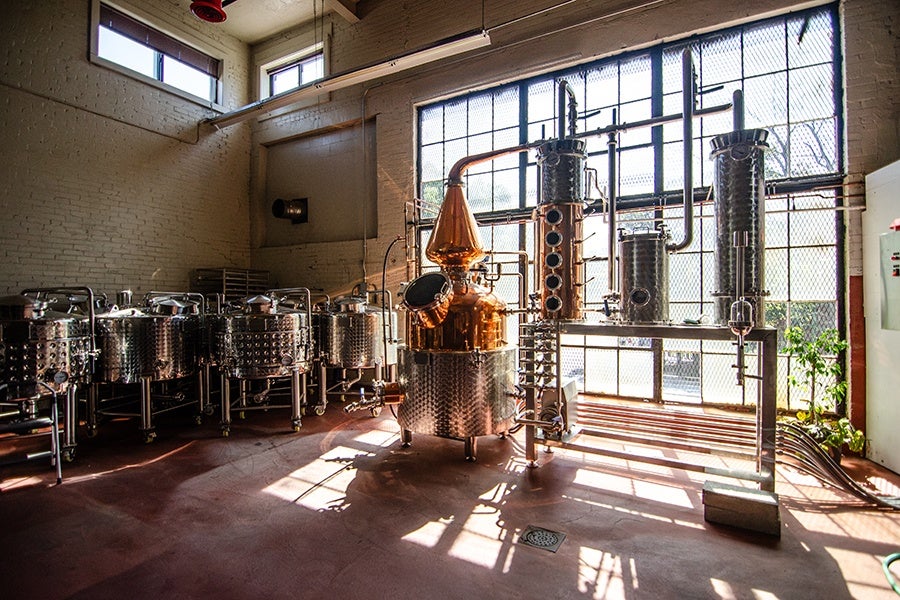
Namu Distilling Co.’s fermenters and still. / Photo by Rachel Leah Blumenthal
The Namu concept is two-fold: There’s the actual distilling operation, which takes place in a sun-drenched room to the right as you enter, and a large cocktail bar. In the distilling room are round silver fermenters where glutinous rice slowly ferments with water and nuruk, a Korean fermentation starter, over two to three weeks before it goes into the gleaming copper still to become soju or, with added botanicals, gin—that part only takes about six hours. Nearly all of the other cocktail ingredients are made from scratch in-house, too, partly because the distillery license prohibits the team from using other branded liquor products. “As much as we can make here, we do,” says Moss, whether that’s a Suze-inspired gentian-and-grapefruit apéritif or an apricot liqueur that stands in for Cocchi Americano.
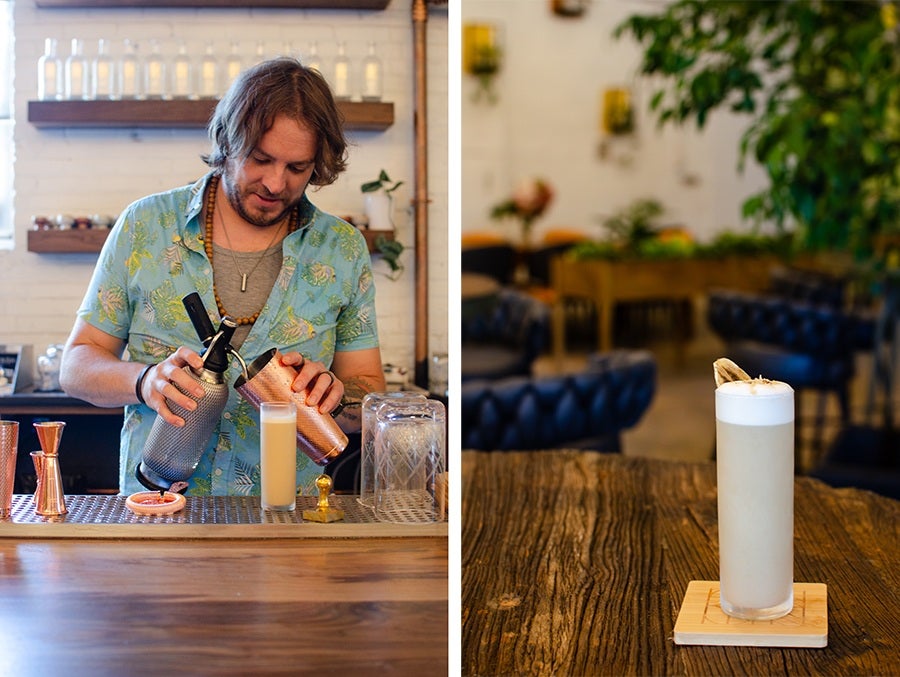
On the left, Namu head bartender Mike Campbell prepares the Banana Haemok. On the right, the finished drink, with banana soju, walnut orgeat, rabarbaro, makgeolli, and egg white. / Photo by Rachel Leah Blumenthal
The rest of the space is dedicated to gathering, tasting, and having fun: a huge, airy cocktail bar with table service. “We want this to be an extremely relaxed, chill environment,” says Moss. Do be sure to take a good look around: Blessing and Moss furnished and decorated the space themselves; Moss recalls spending around 50 hours up in a scissor lift hanging about 100 paper lanterns from the high ceiling. The myriad plants hanging on painted squares on the brick walls and filling wooden planters around the bar were a collaboration with Sudbury-based Wendy Roosa, a.k.a. Garden Artist. “We were struggling with what to do with this giant blank canvas,” says Blessing, and we were like, ‘Can we add plants to it?’ Turns out we can.”
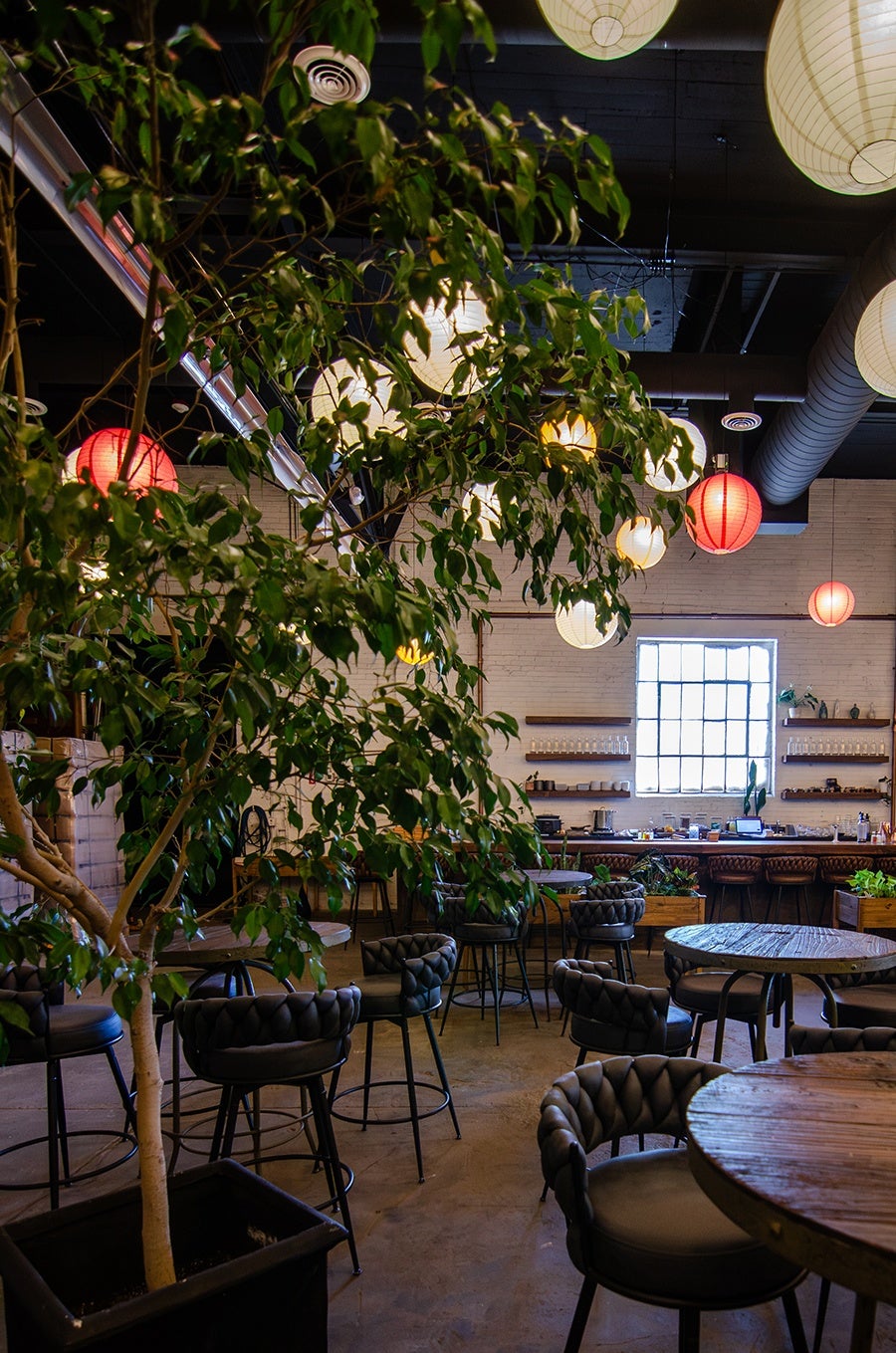
Namu Distilling Co. / Photo by Rachel Leah Blumenthal
This is where you’ll sip Namu’s products on their own or in intricate—and cheekily named (see: Banana Haemok)—cocktails by Blessing, Moss, and head bartender Mike Campbell. Take Moss’ favorite drink, the Arbitrary Nitrogen Deficiency, for example: a coconut-maesil-coffee milk punch with injeolmi bitters and red pepper tincture. “We wanted to use liquid nitrogen to make a frozen cocktail, but no one will sell us liquid nitrogen for liability purposes. Very frustrating, especially since we’re both scientists who have handled it plenty of times! But we pivoted to a delicious milk punch with almost the same ingredients, and it’s really good.” The opening menu also includes a kimchi Gibson (“for the dirty martini crowd,” says Campbell); the citrusy Burnt Orenji, which is “the most elevated screwdriver you’ve ever had, as Campbell promises, and “literally on fire,” as the menu promises; the Yakgwa Daisy, featuring sesame-washed soju; and more. Note that due to how distillery licensing works in Boston, Namu can’t sell or use other brands’ spirits or any wine and beer. If you’re in a beer-y mood, though, try the Maek Believe cocktail, a mix of barley tea, makgeolli, hops amaro, and lily, served in a beer bottle and carbonated naturally. “Is it beer? Is it not beer?” says Moss. (It’s not beer.) “It’s fun!” he adds. There are a couple of nonalcoholic drinks, too, including the “milky” and “smooth” Don’t Mind If I Hodu, with walnut orgeat, jujube, and perilla oil.
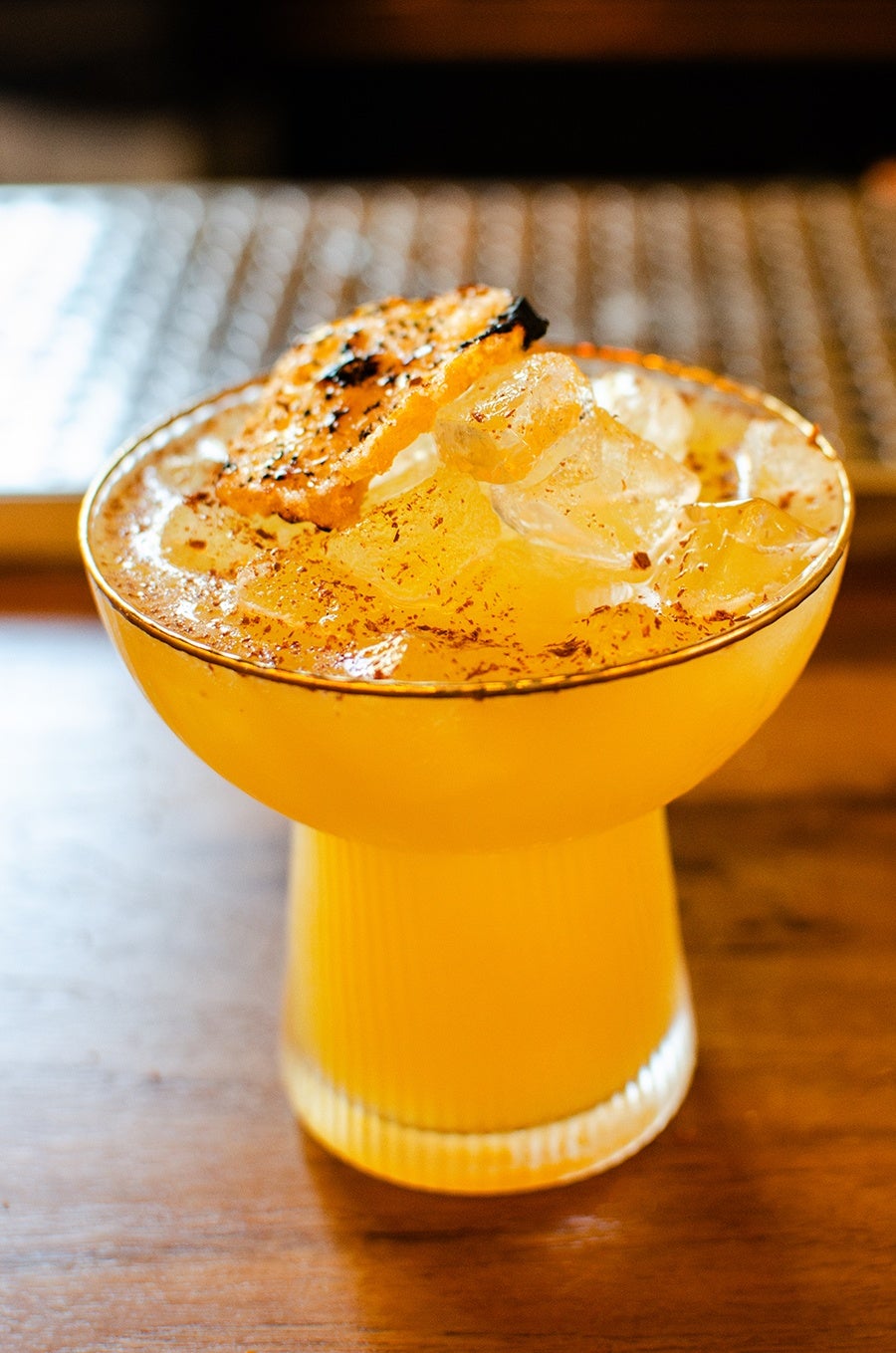
Namu Distilling Co.’s Burnt Orenji, with orange, gin, tamarind, a Suze-inspired liqueur made in-house, lemon, and cinnamon. Served on fire and pictured after the fire burns out, leaving a caramelized slice of partially dehydrated orange. / Photo by Rachel Leah Blumenthal
Blessing oversees a small, ever-changing snack menu that might include dishes such as tteokbokki, marinated olives (“Castelvetrano olives but make it Korean,” says the menu), and Korean seasoned cucumbers, depending on the day. He’s also been workshopping bossam, pork belly wraps. “We don’t have the capability to build a full kitchen on premises,” he says, “so we’re quite limited in what we can do,” but the team plans to supplement their own small plates by hosting pop-ups and food-truck teams in the future. (And, if you want to make a Korean food-and-drink crawl of it, find the Korean fried chicken restaurant Gangnam Spice by the nearby Jackson Square T stop or the forthcoming Bibim Box by Roxbury Crossing.)
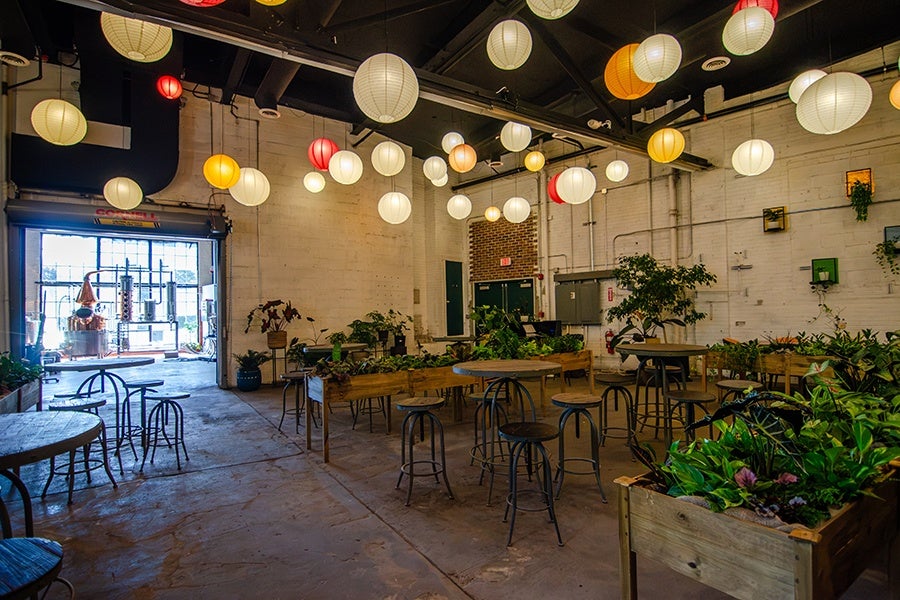
Namu Distilling Co., with the distilling room visible from the cocktail bar. / Photo by Rachel Leah Blumenthal
Blessing and Moss have a distributor lined up and hope to see their products in bars, restaurants, and liquor stores around New England and beyond. It’ll be one of the only domestic sojus around: “I think we’re the sixth soju distillery in the U.S., the only one in New England, and the third to use traditional methods of fermentation with rice wine,” says Moss, noting that the others use different grains. But to start, the focus is on building “a critical mass of supply” and making sure the bar runs smoothly and with plenty of fun, from Banana Haemoks to Rihanna, says Moss: “Come in, be adventurous, and trust us that it’s going to be delicious.”
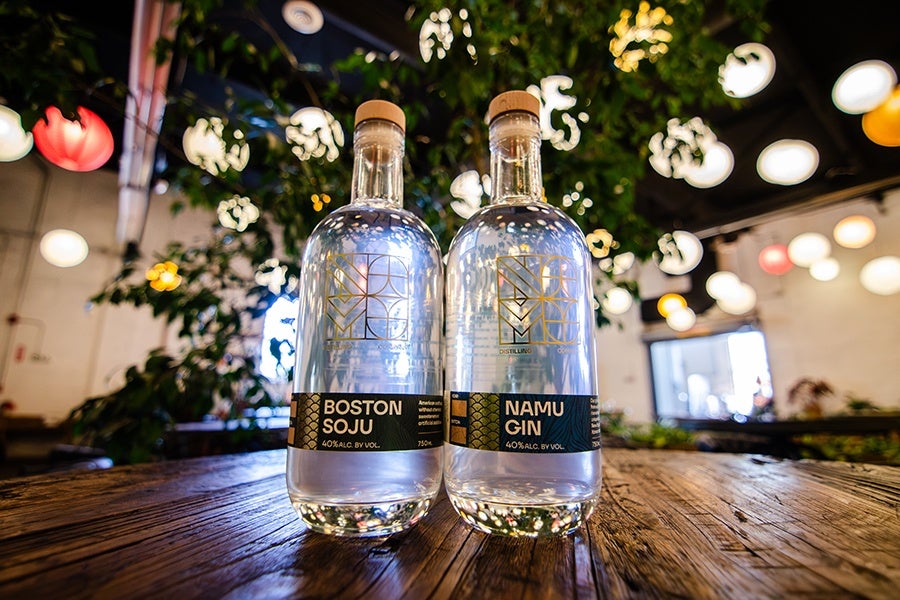
Namu Distilling Co.’s core products, fermented rice-based soju and gin, distilled onsite. / Photo by Rachel Leah Blumenthal
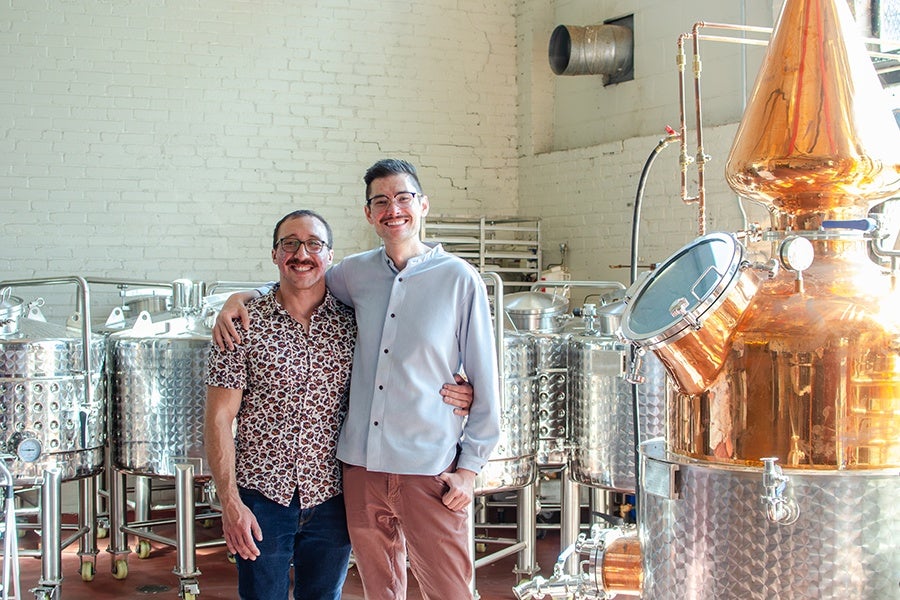
Namu Distilling Co. founders Josh Moss and Will Blessing. / Photo by Rachel Leah Blumenthal
Open Tuesday through Saturday nights. 89 Heath St., Mission Hill (bordering Hyde Square and Fort Hill), Boston, namudistilling.com.
| # | Наименование новости | Тональность | Информативность | Дата публикации |
|---|---|---|---|---|
| 1 | Where to Eat in Greater Boston for September 2026 | 0 | 10.77 | 02-09-2026 |
| 2 | 25 Must-Try Restaurants South of Boston | 0 | 12.93 | 14-08-2026 |
| 3 | New Somerville Restaurant Has Squirt-Gun Drinks and Elk-Sirloin Wraps | 0 | 14.24 | 11-08-2026 |
| 4 | Boston’s Next Big Dining Trend? The Suburbs. | 0 | 10 | 13-08-2026 |
| 5 | A New Tea Bar from the Chopstick Murphys Guy Is Opening in the Seaport | 0 | 7.93 | 18-09-2026 |
| 6 | What to Eat at Hawksmoor, Now Open in Fort Point | 0 | 10 | 10-09-2026 |
| 7 | Brookline Lunch’s Beloved Baklava Pancakes Come to South Boston | 0 | 9.27 | 25-09-2026 |
| 8 | The Saltie Girl Team Is Opening a Seafood Bar in the Old B&G Oysters Space | 0 | 3.79 | 31-08-2026 |
| 9 | Is a Hoodsie an Acceptable Dessert For an Adult? | 0 | 5.83 | 08-09-2026 |
| 10 | Dine Out Boston: What’s new, returning favorites, and the best deals for summer 2026 | 0 | 8.83 | 27-07-2026 |